Berber tea —
the tea nobody serves you
Not the sweet mint tea of the tourist cafés. Something older. Something the mountains kept for themselves.
They call it Whisky Berbère. Berber whisky. A joke — and not a joke. In a country where alcohol is largely absent, tea is what you drink at every hour, for every occasion, with every person you meet. It is the beverage of hospitality, of negotiation, of silence, of celebration. It is, in every meaningful sense, the national drink.
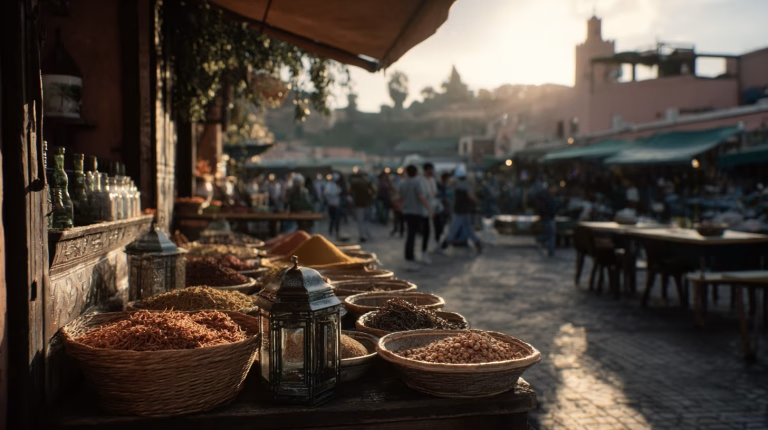
But the tea most visitors encounter — sweet, mintfilled, poured theatrically from a great height into small glasses — is the urban version. The Marrakech version. The version that has learned to perform itself for an audience.
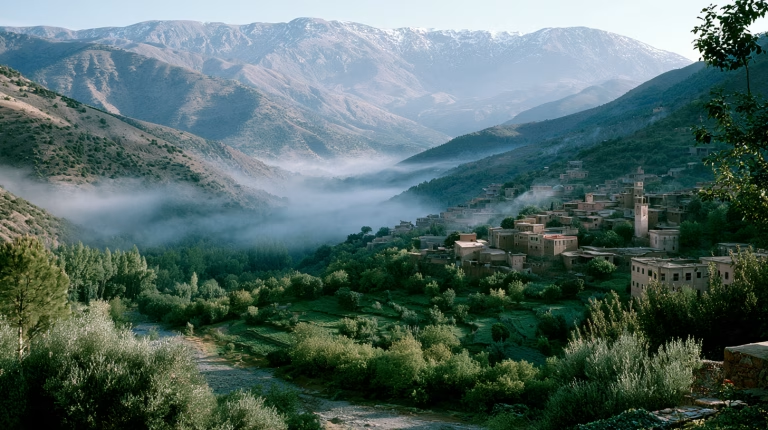
Go into the Atlas Mountains, and something different appears. Rougher. More medicinal. Less sweet, more complex. A tea that was never meant to impress anyone — only to warm you, heal you, and keep you going through a mountain winter.
This is that tea.
The story
What the mountains kept for themselves
At Kasbah Tamadot, perched above the valley of Asni in the High Atlas Mountains, the tea is not something that simply appears at breakfast. It is a ceremony — unhurried, deliberate, performed with intention.
That someone, most mornings, is Mohammed Ait Belhaj. He has worked at Kasbah Tamadot for over twenty years — starting as a waiter, becoming manager, retiring, and then returning. Not because he had to. Because he had something left to share. Every day, Mohammed performs the tea ceremony for guests: explaining each herb, each step, each pour. He calls it what it is — a symbol of hospitality, generosity and warmth. A way to connect. A way to show respect.
“My favourite moment,” he says, “is the serving itself — seeing the guests’ smiles as they taste the tea for the first time.”
A man who retired and came back for a cup of tea. That tells you everything about what tea means here.
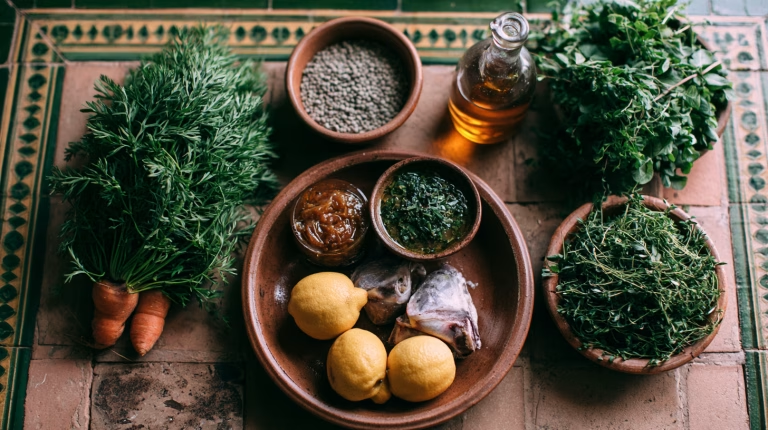
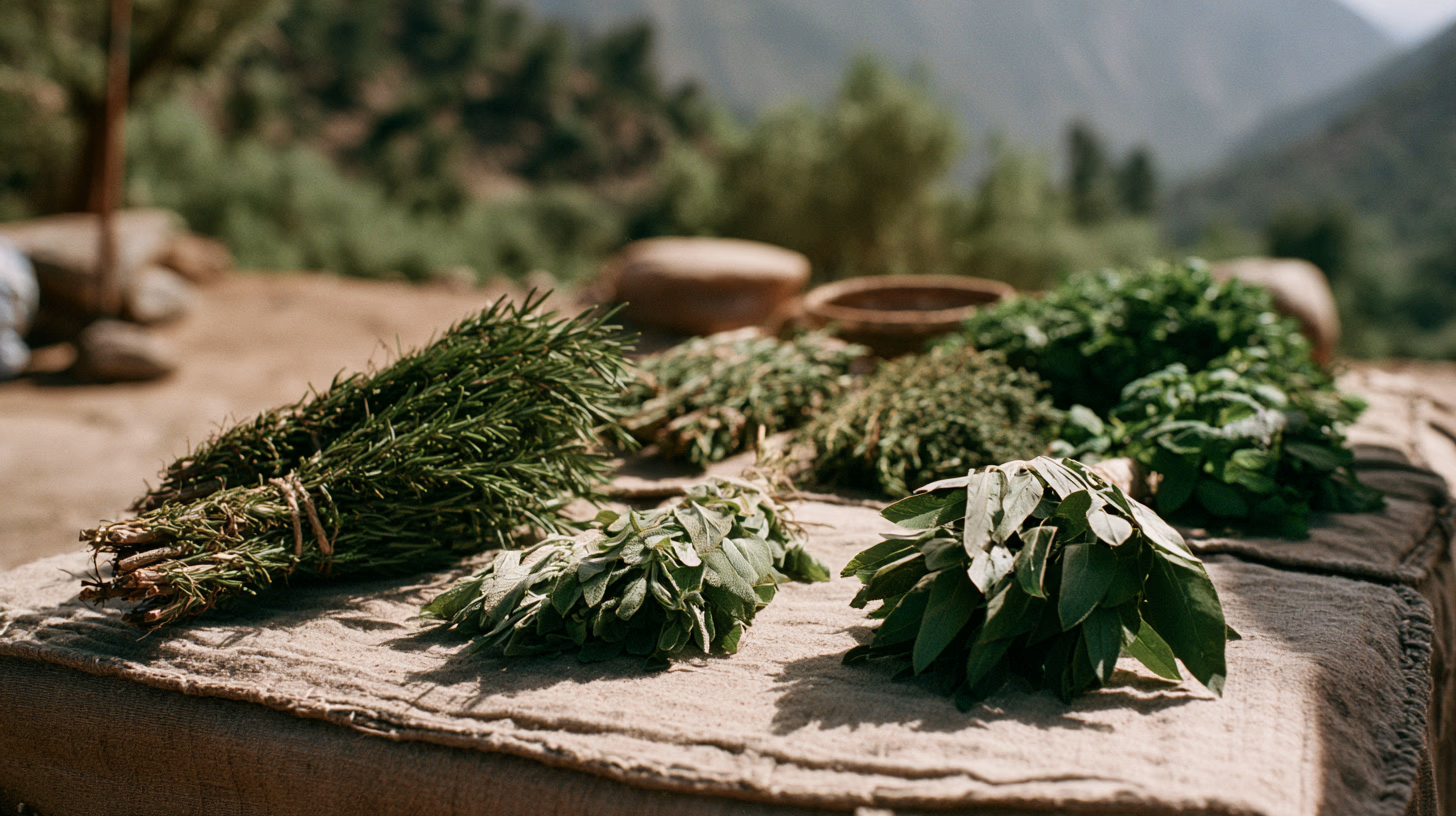
The herbs came from the hotel’s own kitchen garden, and from the Saturday market in Asni below — the same stalls where local families have shopped for generations. Rosemary grown on the hillside. Sage from a walled garden. Bay leaf from a tree old enough to have a name. Wild wormwood — chiba in Darija — that grows in the mountain scrub and has been used medicinally by Berber communities for centuries.
“In the mountains, tea is not a ceremony. It is a necessity. And necessity, here, has its own kind of beauty.”
The Berber communities of the Atlas have always made tea from what the mountain provides. Before the Chinese gunpowder green tea arrived via trade routes in the 18th century, there was only the herbal infusion — wild plants, hot water, warmth. The green tea came later and stayed. But the herbs never left.
Read more about the people and the philosophy behind Kasbah Tamadot →
The ingredients
Five herbs. Five reasons.
Unlike the classic Moroccan mint tea, Berber tea has no fixed recipe. Every family, every village, every season has its own version. What they share is the principle: use what the mountain gives you, use it with intention, and don’t add anything that doesn’t belong.
Fresh mint
The base of almost every Moroccan tea. Cooling in summer, warming in winter. Mint is the herb that makes the others make sense.
Rosemary
The herb that distinguishes Atlas tea from the urban version. Resinous, woody, medicinal. It gives the tea a depth that mint alone never could.
Sage
Earthy and slightly bitter. Sage adds weight to the blend — it is the reason this tea feels like food as much as drink.
Bay leaf
Subtle and slightly floral. Bay leaf rounds the blend and softens the bitterness of the wormwood. One leaf is enough.
Wild wormwood (chiba)
The most distinctive ingredient. Bitter, aromatic, warming. Used for centuries by Berber communities for digestion and cold winters. Use sparingly — it is powerful. Learn more about Artemisia absinthium →
Gunpowder green tea
The base that arrived via trade routes and never left. Small rolled pellets that unfurl slowly in hot water. The foundation everything else builds on.
Berber tea — Atlas Mountain Tea
Ingredients
- 1 tsp Gunpowder green tea
- 6–8 sprigs Fresh mint stems and all
- 2 sprigs Fresh rosemary
- 2 sprigs Fresh sage 3–4 leaves
- 1 Bay leaf
- 1 small sprig Wild wormwood chiba — use sparingly
- 600 ml Water, freshly boiled
- 1–2 tsp Honey or sugar optional, to taste
Method
- Place the green tea in your teapot and add a small splash of boiling water. Swirl once and discard — this rinse removes bitterness and wakes the leaves.
- Add all the fresh herbs to the pot: mint, rosemary, sage, bay leaf and wormwood.
- Pour in the boiling water and place the pot on a low flame for 3–4 minutes. The tea should simmer gently — never boil hard.
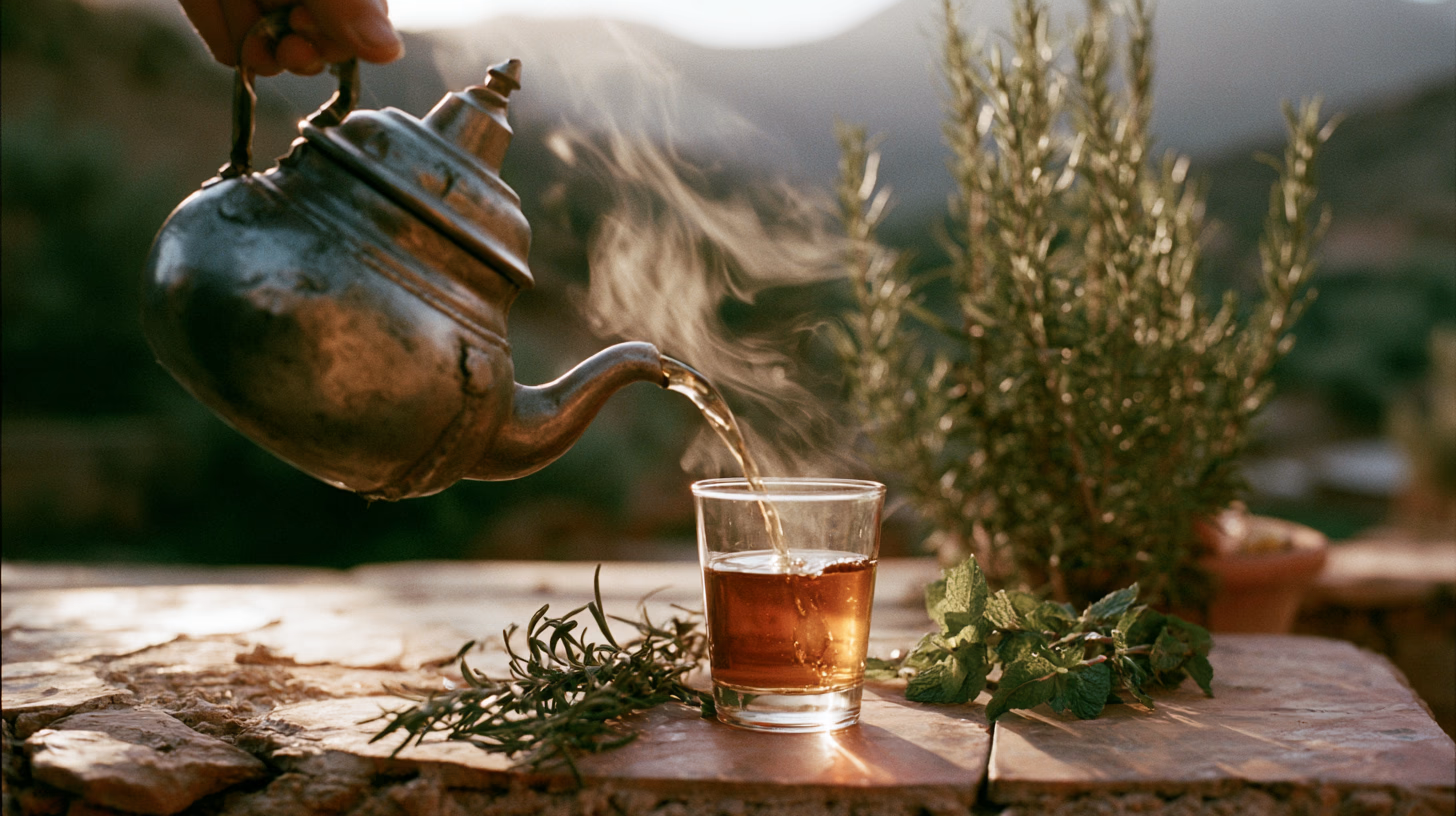
- Pour the first glass back into the pot. Repeat 2–3 times, pouring from a height each time to aerate the tea and develop a light foam. This is not theatre — it genuinely improves the flavour.
- Taste. Adjust sweetness if desired — a small amount of honey works beautifully with the rosemary. The wormwood will give a pleasant, lasting bitterness at the back of the throat.
- Serve in small glasses. Drink slowly. This tea is not meant to be rushed.
Tips & notes
- Wild wormwood can be hard to find outside Morocco — dried is available in some specialist herb shops. If unavailable, the tea is still excellent without it.
- The pouring ritual matters. Pour from a height of at least 30cm — it aerates the tea and creates the characteristic foam.
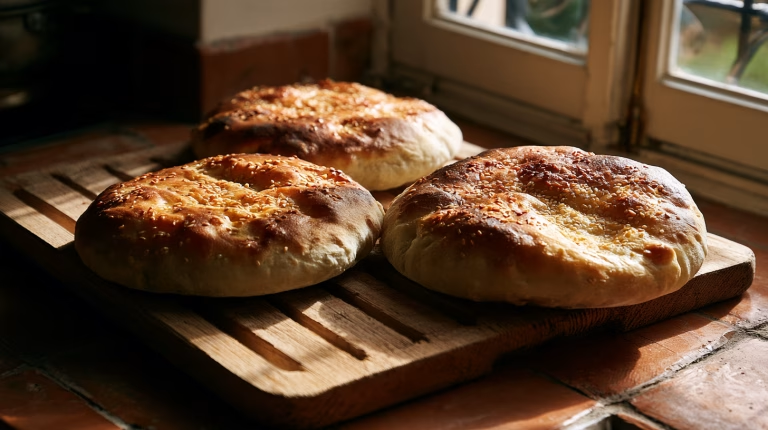
- In the Atlas Mountains, this tea is often served with Berber bread and a small bowl of argan oil for dipping.
- Adjust the herb ratios to season: more rosemary and wormwood in winter, more mint in summer.
- Do not use teabags. The herbs need space to move.
- The first glass is for tasting. The second is for drinking. The third is for staying.
The ritual
Three glasses. Three meanings.
There is a saying in Morocco about the three glasses of tea: the first is as bitter as life, the second is as strong as love, the third is as gentle as death. It is a saying about time — about what changes when you slow down enough to drink three glasses of tea instead of one.
In the Atlas Mountains, they drink tea at least five times a day. Sometimes more. Every glass a different conversation, a different moment, a different person across the table. In Morocco more broadly, tea is sipped twenty or even thirty times a day — at births, at funerals, at negotiations, at nothing in particular. Refusing a glass is not just impolite. It is a refusal of connection itself.
In the Atlas Mountains, where life moves at the pace of the seasons and the tea is brewed on a flame rather than poured from a machine, this is not a metaphor. It is instructions.
The first glass you taste. The second you drink. The third you sit with.
Make the tea. Sit somewhere quiet. Pour from a height. Watch the foam settle. And give yourself the time that the mountains have always had. 🌿
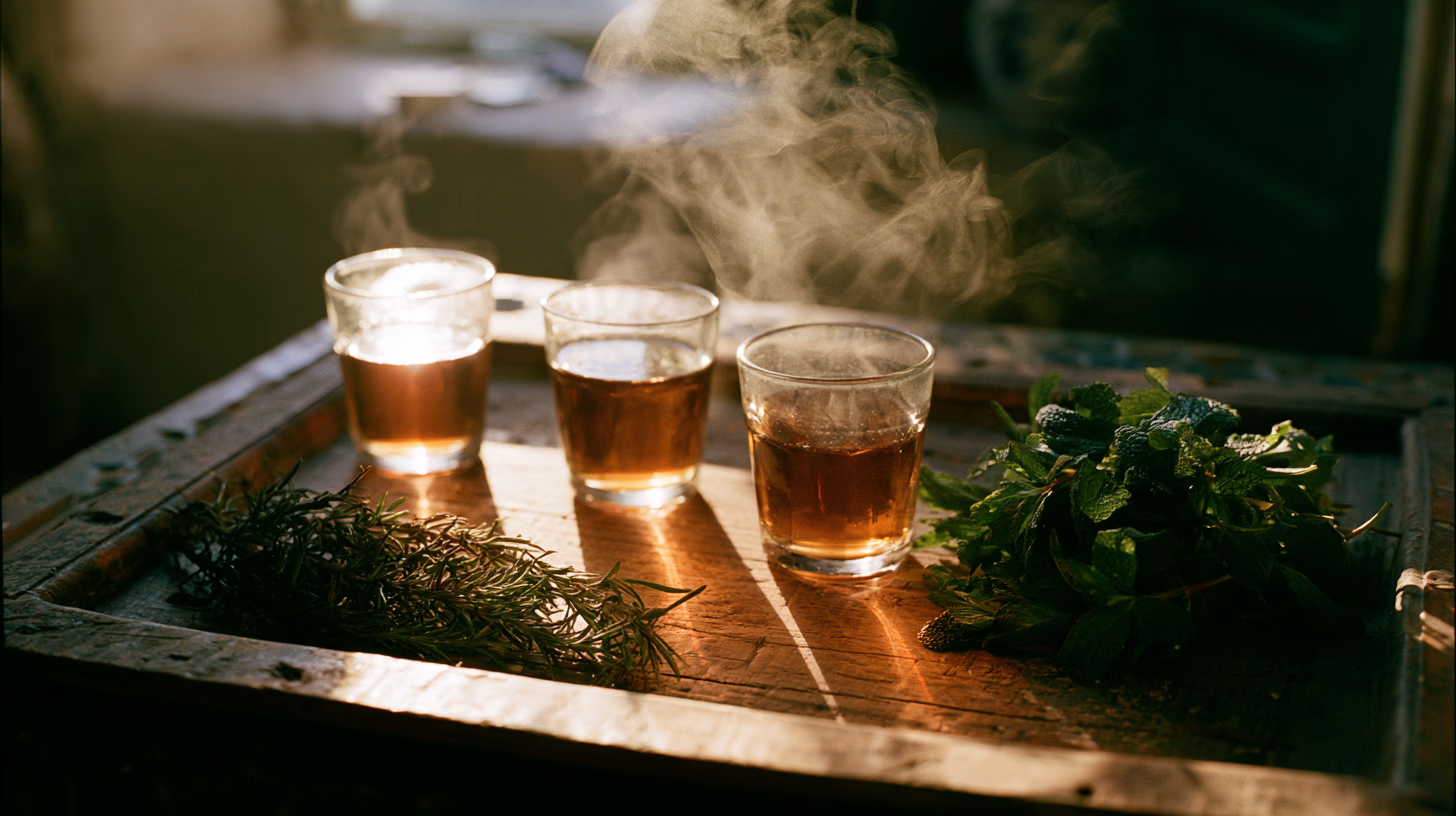
The tea nobody serves you is the one worth finding.
It is not on any menu. It is not described in any guidebook. It lives in the kitchen gardens and the Saturday markets and the mountain kitchens of people who never thought of it as anything other than ordinary.
That is exactly what makes it extraordinary. Every choice is a vote for the world you want to live in. Sometimes that vote is a cup of tea. 🌿