Slow Fashion in Morocco
The Craft That Never Stopped
Morocco didn’t need a slow fashion movement. It never stopped.
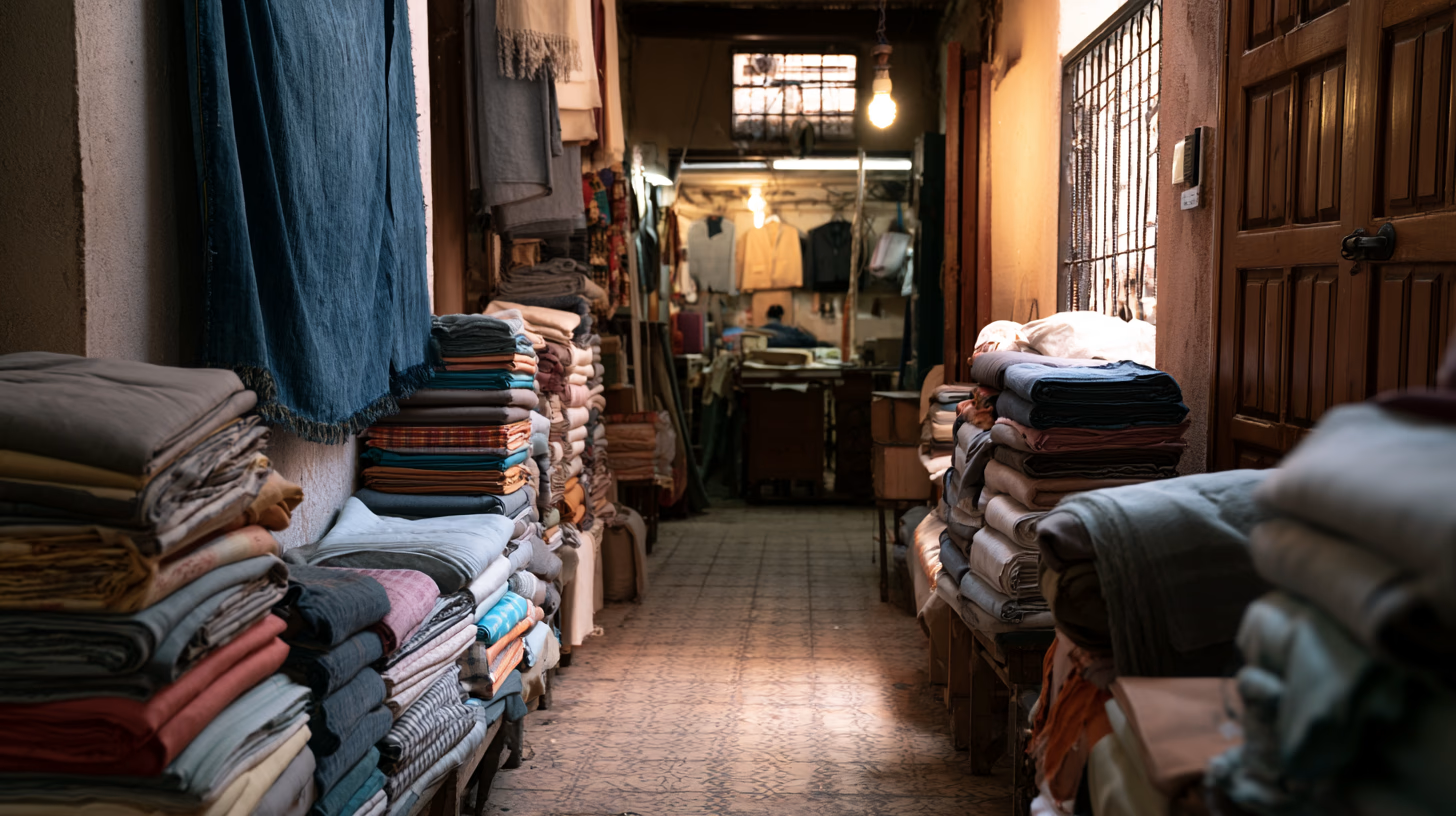
I didn’t go looking for a tailor. I was trying to find a specific street in the medina — the kind of street that doesn’t appear on any map and probably moves slightly each day — when I ducked into a narrow doorway to let a motorbike pass and found myself standing in someone’s workshop.
A man sat cross-legged on a low wooden platform, feeding fabric through a hand-guided sewing machine. On the wall behind him hung three half-finished djellabas and a bolt of deep indigo cloth. He looked up, not particularly surprised to see me. I pointed at the indigo. He nodded. He held it against my shoulder, said something in Darija I didn’t understand, and quoted me a price in dirhams that I had to convert twice before I believed it.
Three days later I picked up a jacket. It fit perfectly. He had made it for me, from a fabric that had been woven thirty kilometres away, in a workshop not unlike his own — the kind of knowledge that lives in the hands, and is never written down.
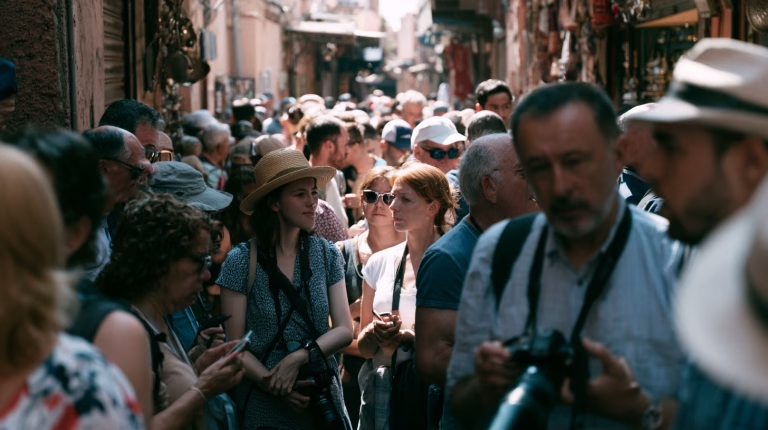
I should say: I had also spent two hours that morning in the wrong part of the souk, being steered firmly toward a shop full of machine-made scarves at tourist prices. The medina gives and takes. Finding the real thing requires either luck, persistence, or someone local who knows which alley to turn down. Usually all three.
But it exists. That is slow fashion. It has been here for centuries. It did not need a name.
Where it begins
The souk as the original slow fashion ecosystem
Walk deep enough into the textile souks of the Marrakech medina and the tourist economy falls away. What remains is a working city — bolts of fabric stacked to the ceiling, dyers with hands stained to the elbow, tailors bent over machines that look older than the buildings around them. This is Souk Ahiak, Souk Semmarine, Souk Cherratine. These are not photo opportunities. They are livelihoods.
The model here is as slow as fashion gets. A local tailor knows his customers by name, by measurement, by preference. He sources fabric from local weavers. He makes to order. He does not produce stock. He does not have a lookbook. The concept of a “season” is meaningless to him — his work is continuous, responsive, personal.
What the rest of the world is slowly, expensively rediscovering, Morocco never abandoned.
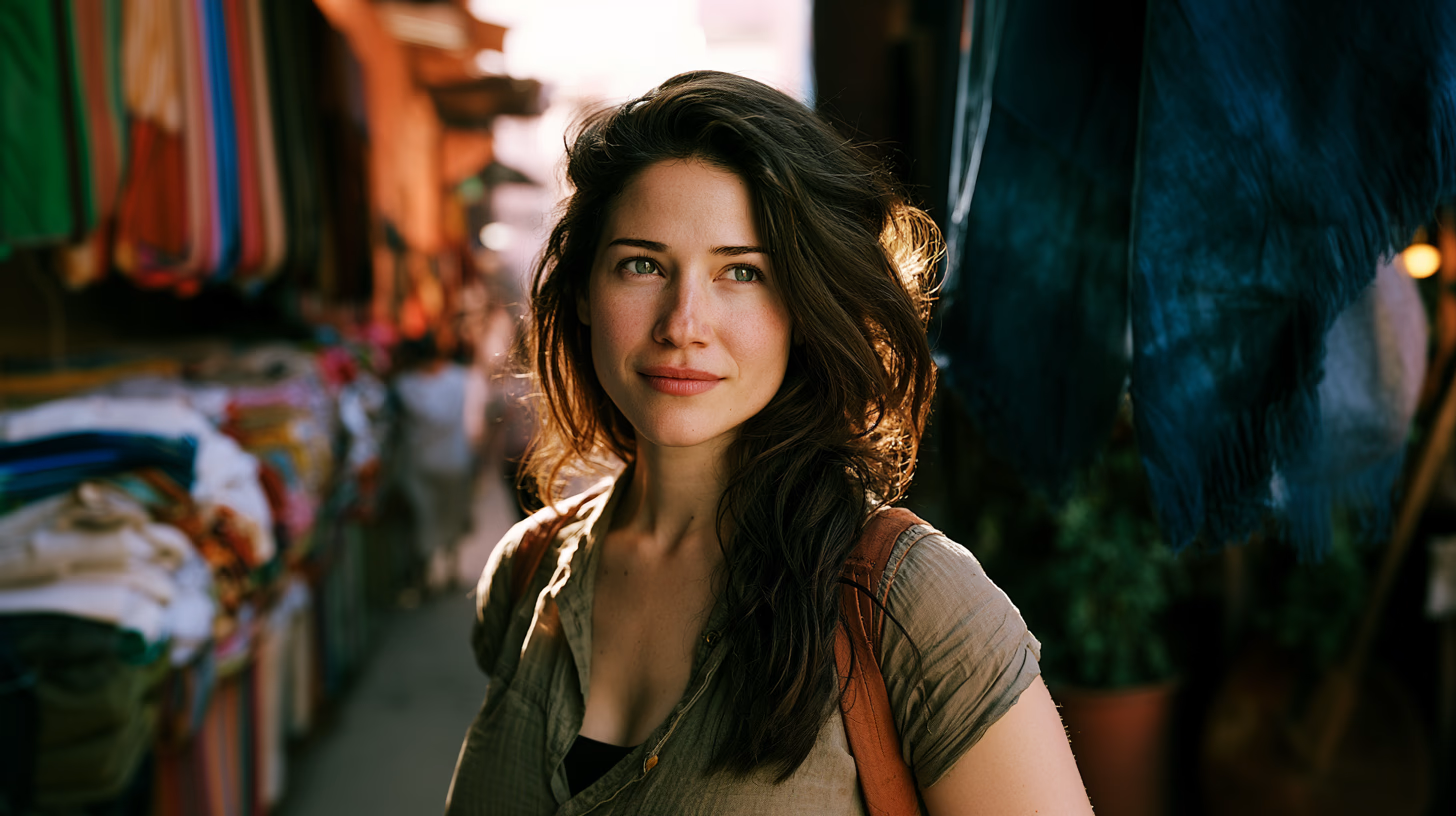
That said: finding it takes patience. The souks are also full of polyester caftans made in China, tourist-facing stalls with aggressive pricing, and the kind of persistent attention that makes a quiet browse feel impossible. The romantic version — Terra ducks into a doorway, finds a master tailor, leaves three days later with a perfect jacket — is real, but it requires time, local knowledge, and a willingness to get genuinely lost before you find the right street. If you’re short on all three, the Ensemble Artisanal on Avenue Mohammed V is a honest alternative: a government-supported cooperative with fixed prices, no haggling, and artisans who made what they’re selling. Less atmospheric, but the craft is real and the transaction is straightforward.
The slow fashion infrastructure exists here.
It just takes patience to find the right doorway.
The names worth knowing
Brands that carry the tradition forward
Beyond the souk, a handful of Moroccan designers and labels are doing something specific: taking what already exists here and giving it a shape that travels — a brand, a website, a language the rest of the world can find. Not replacing the tradition. Extending it.
Anouri Original
Designer Mohamed Youss turns traditional Moroccan carpet into wearable clothing — jackets, wide-leg trousers, unisex pieces with bold floral and geometric patterns drawn from Moroccan craft heritage. The material that once covered a floor now covers your shoulders. Accessible too: €150–250. anourioriginal.com
Les Marrisiennes
A Marrakech women’s label: every piece handmade by Moroccan artisans, designed between Paris and Marrakech, committed to quality over quantity. Their tagline is borrowed but true: We are what we wear. lesmarrisiennes.com
Zyne
Founded in Casablanca in 2016 by Zineb Britel and Laura Pujol, Zyne takes the traditional babouche as its starting point and reinvents it as contemporary footwear — mules, heels, sandals — each pair taking up to 36 hours of hand embroidery and beadwork. Materials are dyed using plant waste and spices. Behind the craft: a cooperative of 50 Moroccan women, many from vulnerable communities, who have built both skill and livelihood through the work. 100% Moroccan, from design to production. zyneofficial.ma
When the craft goes global
Marrakshi Life — Moroccan making, international stage
And then there is Marrakshi Life — something different in scale and ambition, but rooted in the same soil.
This Marrakech-based label has built something rare: a vertically integrated atelier where every garment is hand-woven on wooden looms, made to order, zero waste, using organic cotton and linen. The brand is fair trade, vegan, cruelty-free, locally sourced and crafted. It ships globally. It has a following.
The collections are immediately striking — wide, flowing silhouettes in vivid hand-woven stripes that shift like light through a mashrabiya screen. Caftans, jumpsuits, tunics. Gender-fluid. Completely outside any trend cycle. The kind of clothing that looks better in three years than it does today.
High fashion · Marrakech
Marrakshi Life
Hand-woven on wooden looms by artisans in their own Marrakech atelier. Made to order — no overstock, no waste. Organic cotton and linen. Fair trade. Vegan. Every piece a considered object.
The prices reflect all of this: caftans from $600, jumpsuits around $800. This is not fast fashion with a conscience sticker. It is the real cost of making something properly, paying people fairly, and producing nothing that doesn’t need to exist.
Think of it as the ambassador — the proof, legible to the rest of the world, that Moroccan craft can stand on any international stage it chooses.
Every choice is a vote.
Sometimes that vote is a $700 jumpsuit made on a wooden loom. Sometimes it is a man cross-legged on a wooden platform in a doorway off an unmarked street, cutting indigo fabric to your exact measurements for a price that makes you want to tip him twice.
Both are votes for the same thing: the hand over the machine. The maker over the supply chain. The garment that was made for someone, not for nobody in particular.
Morocco didn’t need a slow fashion movement. It just needed people to pay attention. 🌿