Kasbah Tamadot —
luxury as it should be done
A soft breeze. A valley in the High Atlas. And a choice that changed everything for an entire community.
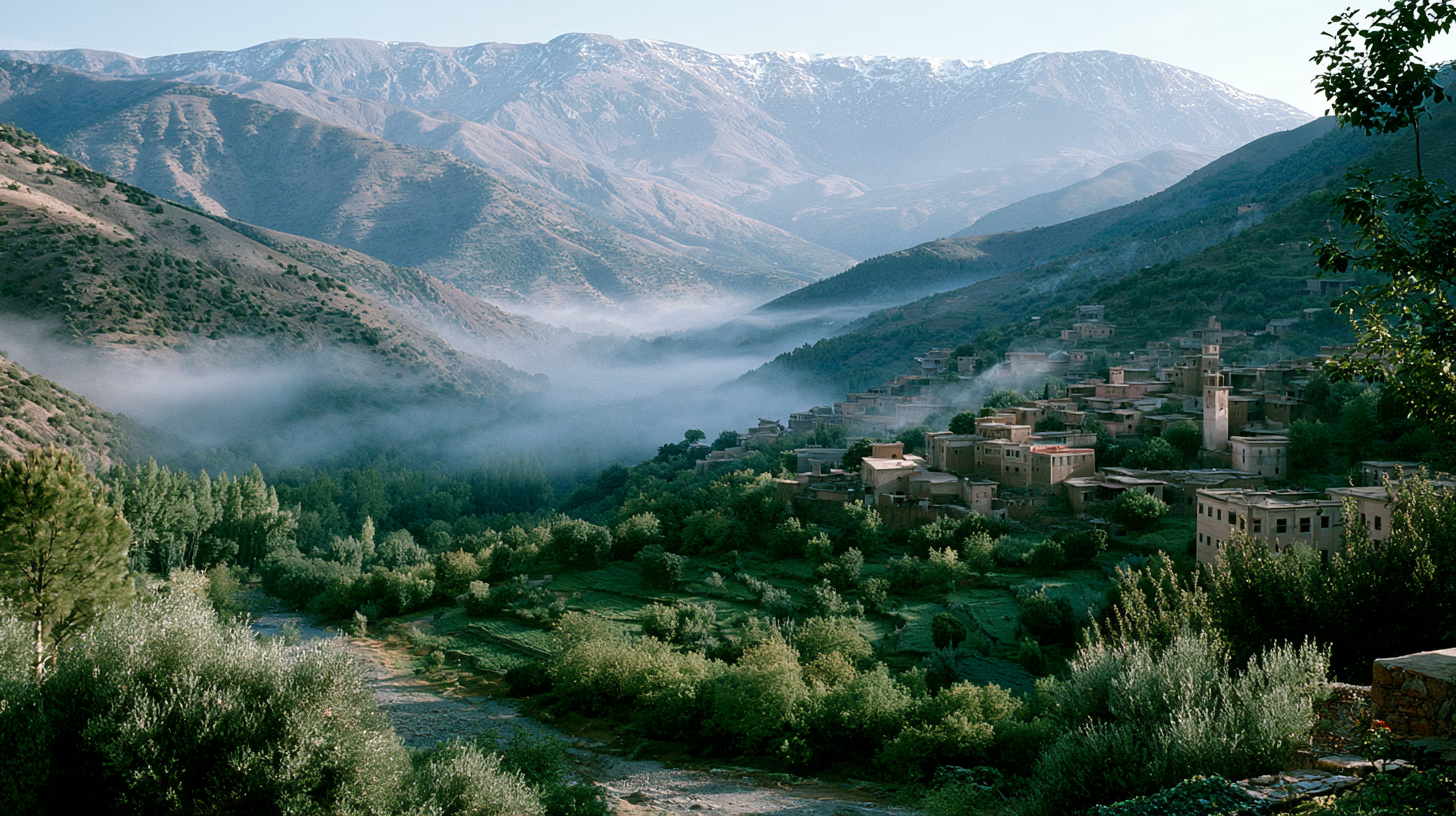
The road from Marrakech climbs slowly. The city dissolves behind you — the noise, the medina, the motorbikes — and something older takes its place. Rock and cedar and the smell of altitude. After about an hour, the valley of Asni opens up, and there, perched at the top of it, you see the kasbah.
Tamadot. In Berber, it means soft breeze.
I had heard of it before. Richard Branson’s hotel in the Atlas Mountains. Luxury, infinity pool, helicopter transfers. The kind of place that seems designed for a different kind of traveller than the one I try to be.
I was wrong.
The story
A balloon, a kasbah, and a promise
Branson didn’t set out to buy a hotel. He came to Morocco to attempt a round-the-world balloon flight. He didn’t make it around the world — but somewhere over the Atlas Mountains, he looked down and saw a kasbah that stopped him completely. It was his parents, Ted and Eve, who had first found it on an earlier trip and dreamed aloud about what it could become. They planted the idea. Richard made it real.
He bought it. And then he made a promise — to his mother Eve, and to the mountains below him: that the people already living there would be the ones to benefit.
That promise became the Eve Branson Foundation, established in 2006. And it became the operating philosophy of Kasbah Tamadot itself — a hotel where every person on the payroll is Moroccan, and most of them come from the valley directly below.
“Tourism is so important for Morocco’s people.”
— Richard Branson, on reopening after the 2023 earthquake
The people
What a job here actually means
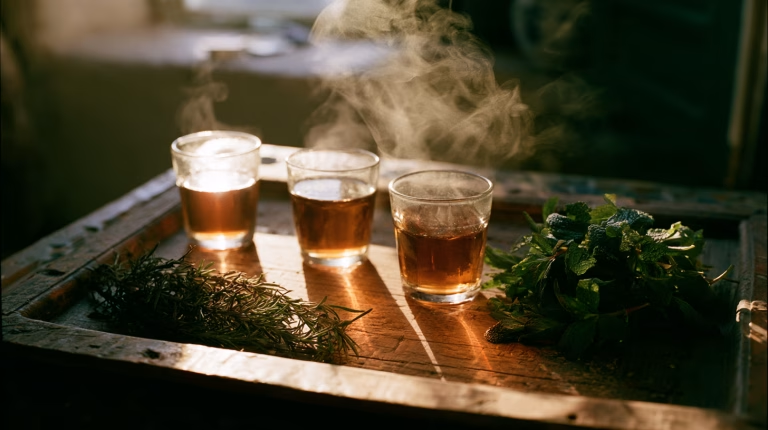
I met Youssef on my second morning. We had just come from Mohammed’s tea ceremony — Berber tea, not the sweet mint version you get everywhere in Marrakech, but something earthier, more medicinal. Rosemary, sage, bay leaf, a whisper of wild wormwood. Youssef waited until the last glass was poured before he started talking. He told me his father had worked the land in the valley below. That he himself had learned English at the classes the hotel set up — free, open to anyone, whether they wanted to work here or not.
He has worked at Kasbah Tamadot for seven years. His daughter goes to school in Marrakech. That, he said quietly, was not something his family had imagined possible.
In the staff dining room, I noticed something on the wall among the photos — a beautifully printed poster, professionally made, with names running down both sides and coloured lines connecting them. Each colour a different relationship: father, brother, sister, cousin. A map of the families that keep this place alive. I stood looking at it for longer than I expected. This was not a hotel that happened to employ local people. This was a community that had built a hotel around itself.
The numbers confirm what Youssef’s story suggests: each person employed here supports up to ten others in their extended family. The staff retention rate is exceptionally high. These are not seasonal workers filling beds — they are people building lives.
“Ce n’est pas un travail. C’est une vie.”
It’s not a job. It’s a life.
Youssef is not the only one. There is Mohammed Ait Belhaj — the hotel’s tea master. He has worked here for over twenty years. Started as a waiter. Became the manager. Retired. And then came back — not because he had to, but because he had something left to give. Every day, Mohammed performs the traditional tea ceremony for guests: explaining each herb, each pour, each glass. He calls it what it is.
“It’s a symbol of hospitality, generosity and warmth. A way to connect, to share a moment, and to show respect to guests.”
A man who retired and returned for a cup of tea. That is what this place does to people.
September 2023
When the mountain moved
On 8 September 2023, a 6.8 magnitude earthquake struck the Al Haouz region of Morocco. At least 2,960 people died. Nearly three million were affected. The villages in the valleys around Asni — the same villages where Kasbah Tamadot’s staff live — were among the hardest hit.
The hotel was partially damaged. It could have closed entirely.
It didn’t. Branson kept part of it open — the Berber tents overlooking the mountains — specifically to continue supporting tourism to the surrounding area. The Eve Branson Foundation raised over £1.2 million for emergency relief. And while one half of the hotel was being rebuilt, the other half was feeding and employing the people who needed it most.
When it reopened, it opened bigger. Six new riads, each with its own private pool and panoramic views. Not as an act of indulgence — but as a statement: we are staying.
What you find here
The kasbah in detail
The interiors tell their own story. The original kasbah was owned by Luciano Tempo, a renowned antiques dealer, who filled it with pieces from India, Indonesia and North Africa. Branson inherited not just the building but the collection — and kept it. Every room is different. Every object has travelled.
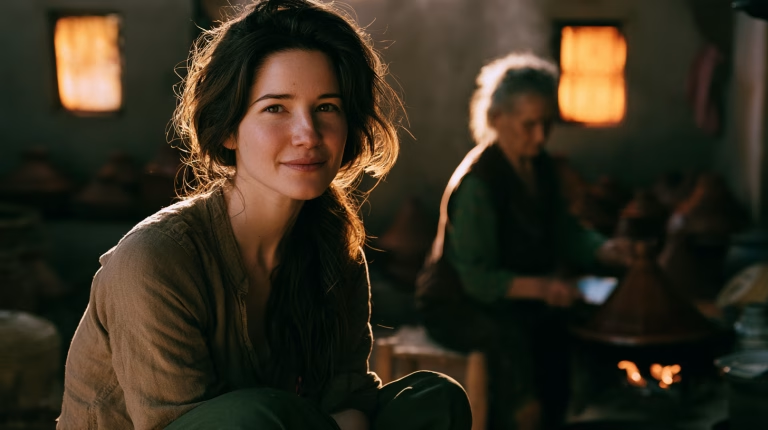
But the detail that stayed with me most was not inside the kasbah at all. It was in the garden kitchen, where two women — Mina and Malika — arrive every morning to bake bread. Three kinds. Around 250 loaves a day. All by hand, all in wood-fired clay ovens, all using techniques that have been passed down through generations of Berber women in the Atlas Mountains. In the Atlas Mountains, bread is more than sustenance — it is ritual, tradition and community baked into every loaf. Mina and Malika are not background detail. They are the heart of the kitchen.
Outside, the hotel’s extended family includes six peacocks, two mules, two donkeys, two camels, six goats, two ewes and seven ducks. Nobody mentioned them in the brochure. I found them more reassuring than the infinity pool. The goats, with their long curly coats, appear to be Angora goats — the ones that produce mohair, not to be confused with Angora rabbits, who produce the fibre that shares their name. In the Atlas Mountains, even the animals have a story worth knowing.
What makes Kasbah Tamadot different
- 100% Moroccan team, 98% from the local community
- Free English classes for local population — open to all, not just staff
- Eve Branson Foundation active since 2006 — education, healthcare, livelihoods
- Stayed partially open after 2023 earthquake to support local tourism
- £1.2 million raised for earthquake emergency relief
- Pack for a Purpose member — guests contribute directly to community projects: packforapurpose.org
- Located in Asni — Saturday market, Berber villages, Toubkal National Park
The detail that stayed with me
The tea that nobody serves you
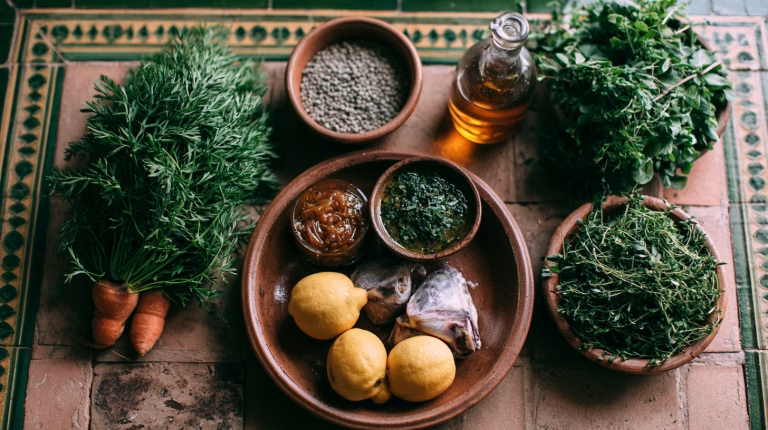
Every morning, Youssef brought the same tea. Rosemary, sage, bay leaf, wild wormwood, mint. Not from a menu — it wasn’t on any menu. It was simply what people drink in the Atlas, what they have always drunk, what the mountains have always provided.
Later I discovered that many of the herbs come from the hotel’s own kitchen garden — a walled organic garden within the kasbah grounds where much of the kitchen’s produce grows. From garden to cup, a few dozen metres. It is, without drama, exactly how it should work.
On the last morning, I asked Youssef where the rest came from. He pointed down the valley. The Saturday market in Asni — the same stalls where his mother had shopped for forty years. The same women, the same plants, the same knowledge passed quietly from hand to hand.
The most sustainable ingredient, I thought, is always the one that was already there.
Read more about Berber tea and the herbs of the Atlas →
If you go
How to visit with intention
You don’t have to stay overnight to experience Kasbah Tamadot — lunch is available to non-guests, and the drive from Marrakech takes about an hour through some of the most beautiful landscape in Morocco.
If you do stay: ask about the Pack for a Purpose programme. Bring something useful for the local schools or health clinics. Ask your server where they come from. Visit the Saturday market in Asni — where the same herbs, spices and produce end up in the hotel’s kitchen.
And drink the tea. Not because it’s on the menu. Because it isn’t.
Practical details
- Location: Asni village, High Atlas Mountains — 1 hour from Marrakech
- Open year-round (brief closure mid-January)
- Lunch available for non-guests
- Activities: hiking, cycling, Berber village visits, hot air balloon
- Eve Branson Foundation: evebransonfoundation.org.uk
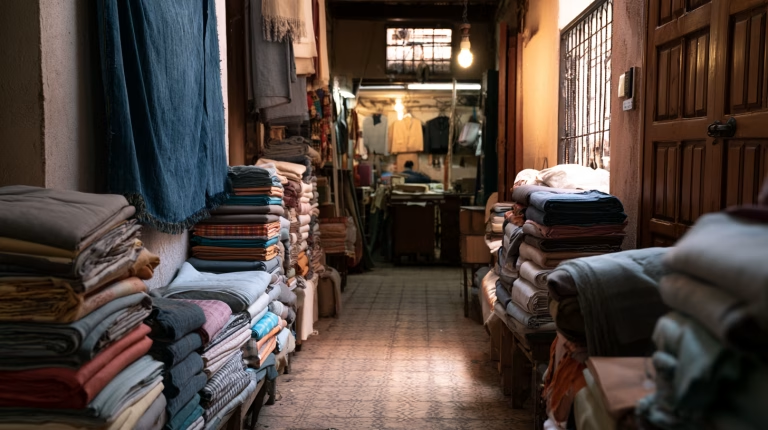
- Saturday market in Asni — herbs, textiles, local produce
Luxury is not the problem. Indifference is.
A hotel that employs every person from the valley below it, that stays open after an earthquake to keep the community alive, that serves you tea grown in its own garden and bread baked by Mina and Malika every morning in a clay oven — that is not a compromise between comfort and conscience.
That is what travel looks like when someone decides to vote correctly.
Every choice is a vote for the world you want to live in. Some people vote with an entire mountain. 🌿