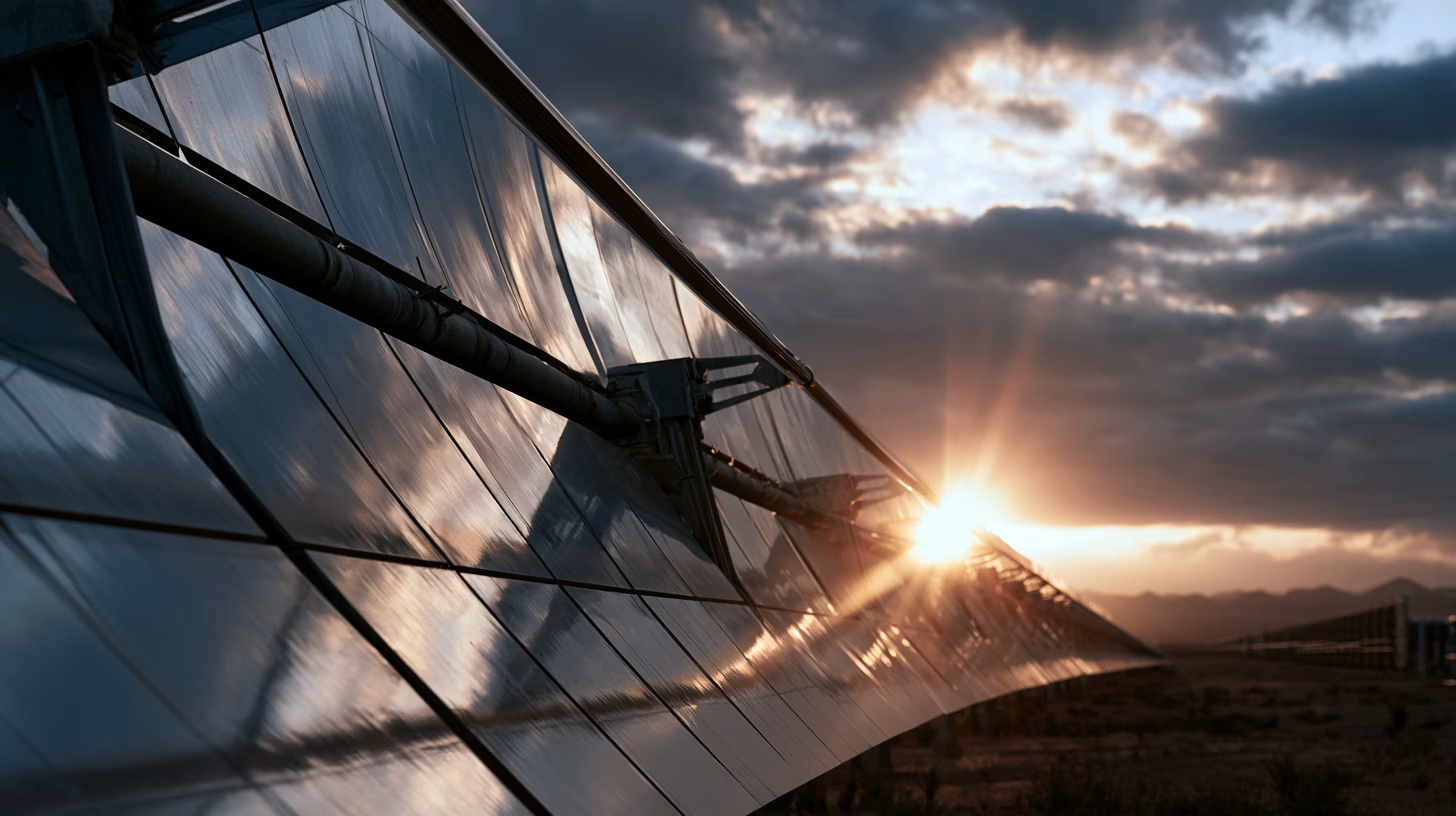
The country that imports 95% of its energy is quietly becoming one of the world’s most ambitious solar powers. Terra visits the edge of the Sahara in Morocco and finds something unexpected: hope with a panel count.
I didn’t come to Ouarzazate for the solar panels.
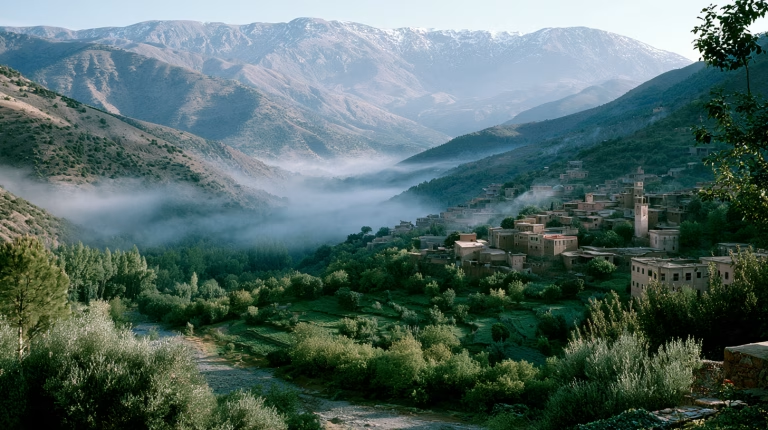
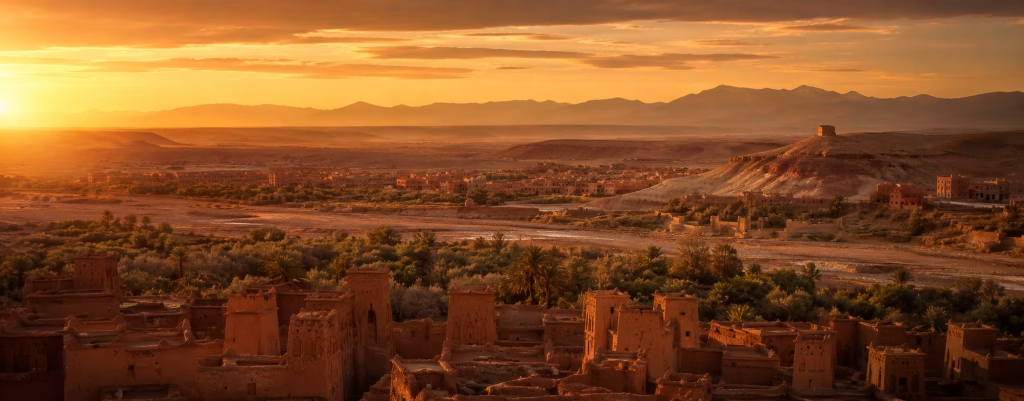
I came because it’s one of those places that feels like the end of the world in the best possible way — ochre desert, dramatic light, the Atlas Mountains fading into dust on the horizon. The city has been a backdrop for films for decades. Lawrence of Arabia. Gladiator. Game of Thrones. The landscape here is so cinematic it barely seems real.
And then you drive north out of the city, and suddenly the desert is covered in mirrors.
The city of light — literally
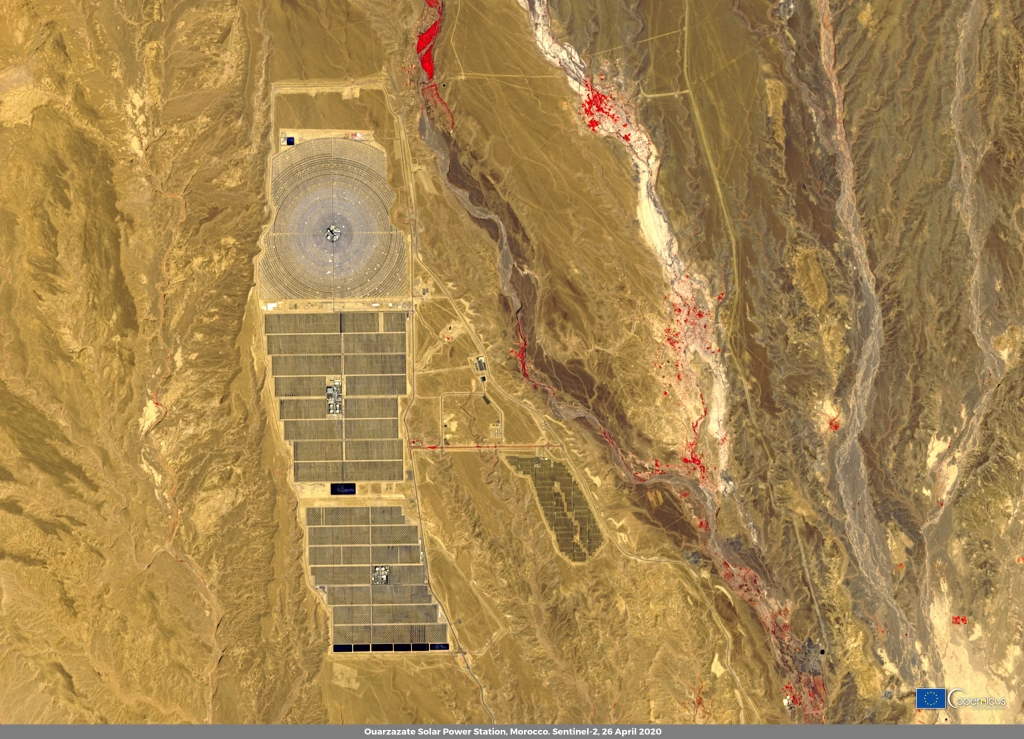
The Noor Ouarzazate Solar Complex is a 580MW power plant located just 10 kilometres north-east of the city — the world’s largest concentrated solar power plant. Standing at its edge, the scale is almost impossible to process. 580 megawatts — enough to supply a million Moroccan homes with renewable electricity. The equivalent of two cities the size of Marrakech. Power TechnologyEsfccompany
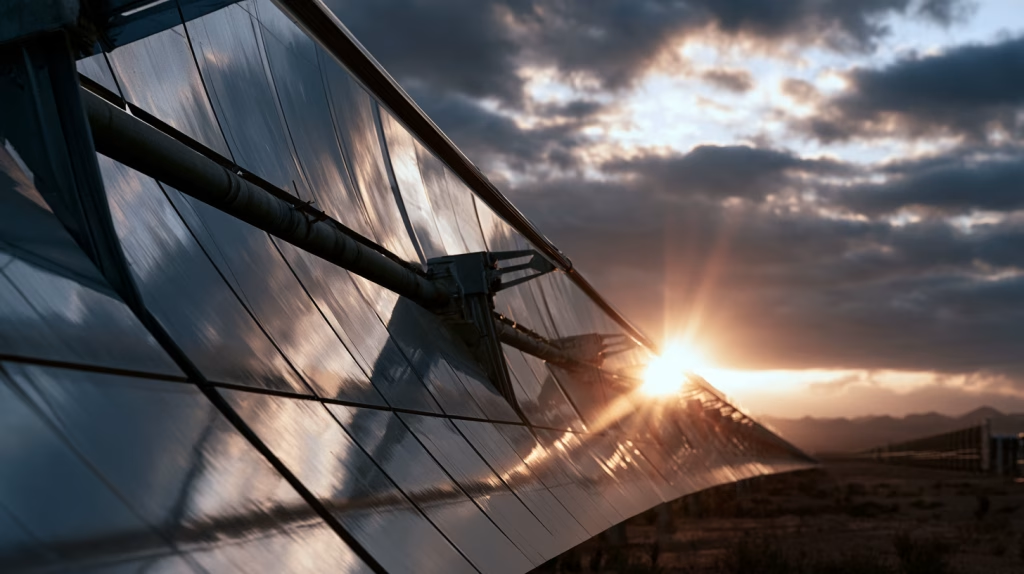
What makes Noor different from a conventional solar farm is the technology. These aren’t photovoltaic panels sitting passively in the sun. They’re curved mirrors — thousands of them — that track the sun across the sky and concentrate its heat into a fluid that drives turbines. And crucially: the plant can store that energy, generating power even when the sun isn’t shining. That’s the problem most renewable energy projects struggle with. Morocco cracked it, here, in the Sahara. worldbank
A country that had everything to gain: Morocco
To understand why Morocco bet so heavily on solar, you need to understand the starting point. Morocco had historically depended on imports for up to 95% of its energy needs. That’s an extraordinary vulnerability — economically, politically, environmentally. Every barrel of oil, every cubic metre of gas, imported. Every price shock felt immediately. SurgePV
MASEN, the Moroccan Agency for Sustainable Energy, launched the Noor program in 2009 with a bold ambition: transform the country’s greatest natural resource — sunshine — into energy independence. The goal is to increase the share of renewable energy to 52% by 2030. SurgePVEsfccompany
That’s not a distant dream. It’s already happening.
From mirrors to momentum
When fully operational, Noor Ouarzazate is estimated to reduce Morocco’s energy dependence by the equivalent of two and a half million tons of oil, while lowering carbon emissions by 760,000 tons per year. worldbank
And the program isn’t slowing down. In March 2026, Morocco launched Noor Atlas — a new 305MW solar project — with grid connection targeted for 2027. The country now has over 1,000MW of total solar capacity, and future projects are combining solar with battery storage for round-the-clock clean energy. SurgePV
Morocco is also the only African country with a direct power cable link to Europe — which means the clean energy it generates could one day power homes far beyond its own borders.
Ouarzazate is also the perfect base for slow travel through southern Morocco — a reminder that the most sustainable journeys are the ones that take their time. If you want to understand how Terra travels, start with the art of getting lost in Marrakech.

What the mirrors taught me
Standing in the Saharan heat, watching those curved mirrors track the arc of the sun with quiet mechanical precision, I kept thinking about a question I get asked a lot: “Is sustainable travel even possible? Doesn’t travelling have a footprint?”
Yes. It does. Every journey has a cost.
But so does standing still. So does a world that never invests in what comes next. Morocco didn’t wait for perfect conditions. It started with what it had — desert, sun, ambition — and built something extraordinary from it.
That feels like a lesson worth carrying.
Every choice is a vote. Morocco voted for the sun. And the sun, for once, voted back.