The Kitchen That Wastes Nothing —
Zero Waste Cooking, the Moroccan Way
Long before zero waste became a trend, Moroccan grandmothers were already living it. Terra looks at what the world’s most sustainable cuisine can teach us.
Long before zero waste became a trend, Moroccan grandmothers were already living it. Terra looks at what the world’s most sustainable cuisine can teach us.
The term “zero waste cooking” was invented in the West relatively recently. In Morocco, it has no name — because it never needed one. It’s just how you cook.
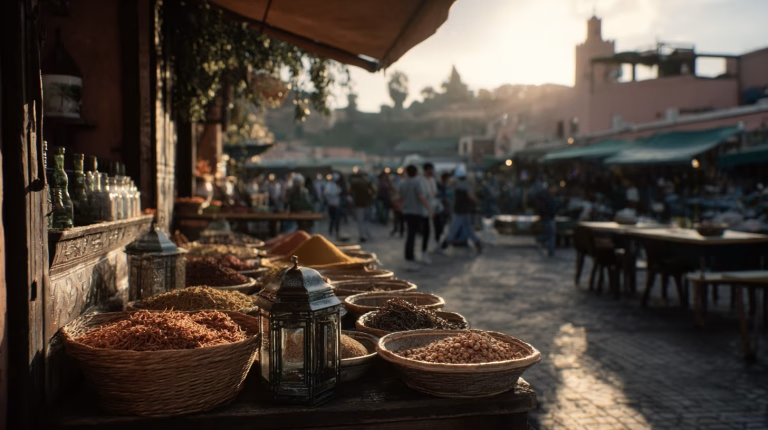
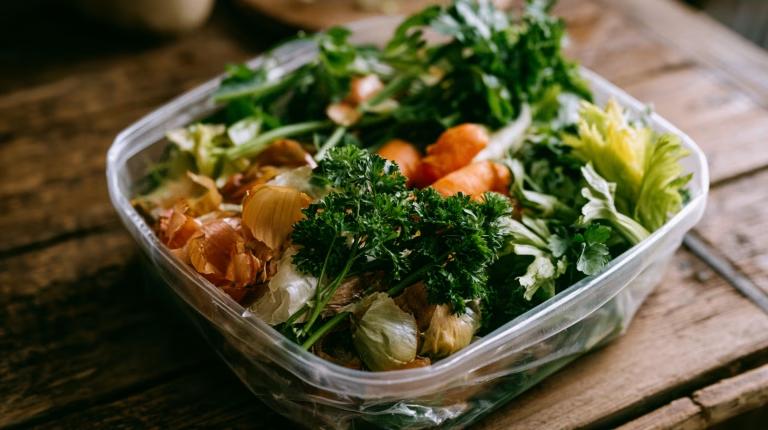
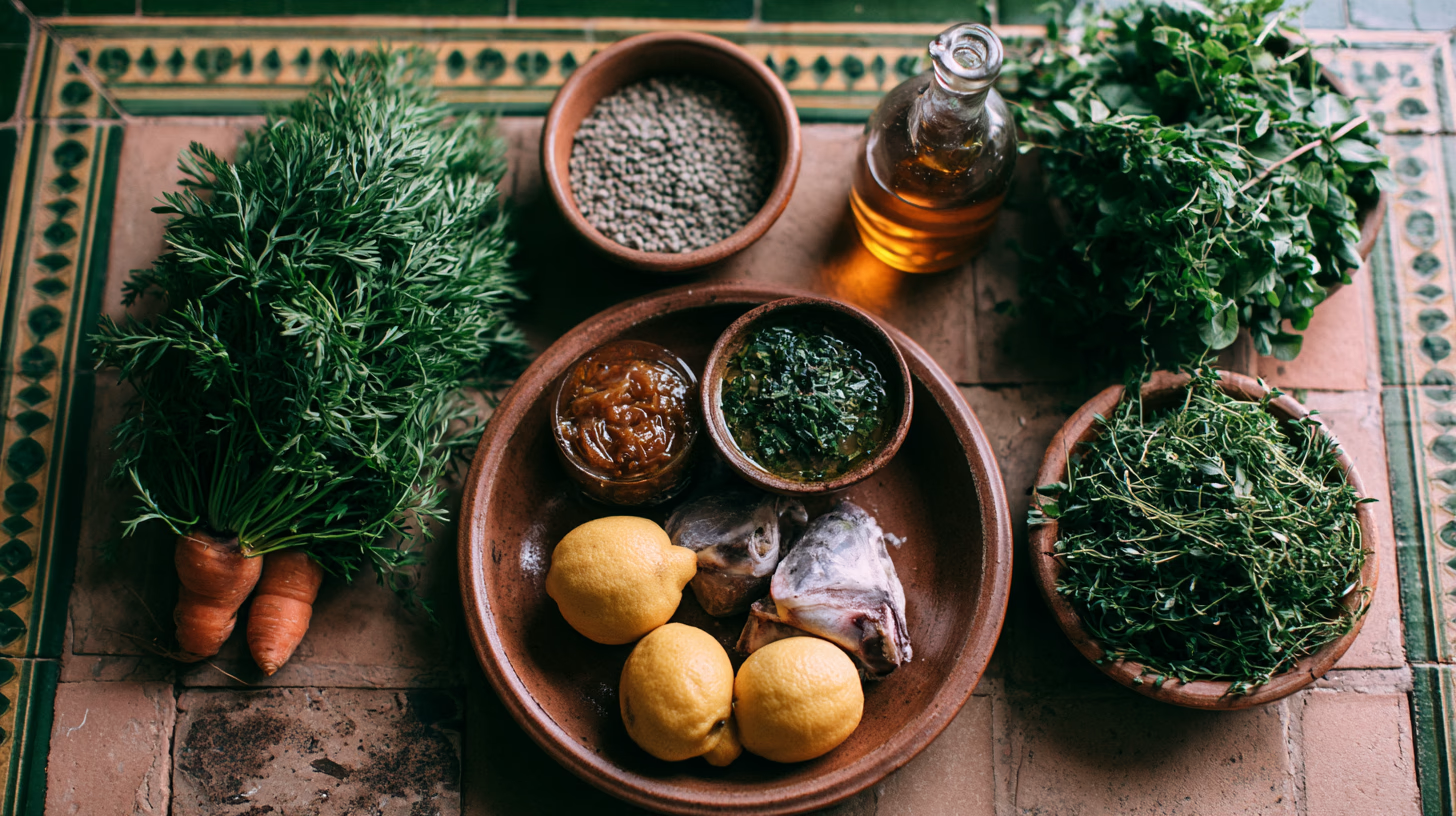
I noticed it first in a small restaurant tucked behind the spice market in Marrakech. The owner — a woman in her sixties who had been cooking the same dishes for forty years — was preparing a tagine. Nothing was wasted. The carrot tops went into the stock. The stale bread from yesterday became a base for a soup. The lamb bones, already used once, were simmering again with chickpeas and cumin. Every part of every ingredient had a purpose. It wasn’t a philosophy. It was just Tuesday.
The tagine — a vessel and a worldview
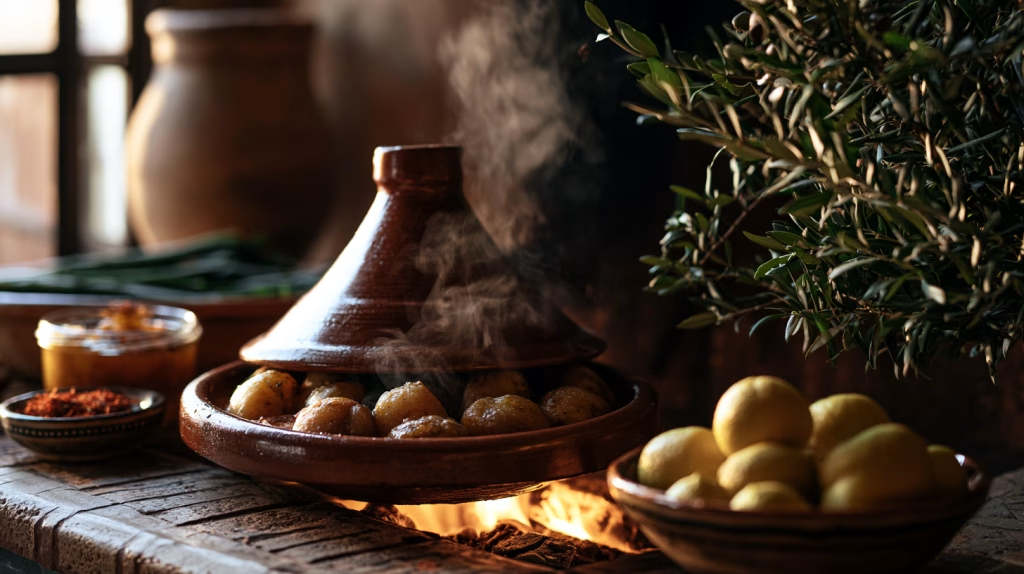
The traditional Moroccan tagine is both vessel and culinary philosophy — built for slow cooking, with principles that match perfectly: slow, gentle cooking, seasonal ingredients, minimal waste, and deep respect for traditions. The Tagine Table
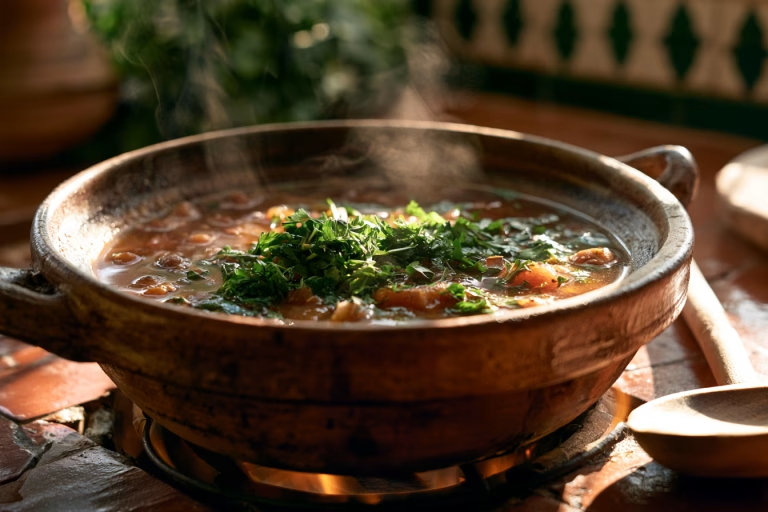
The conical clay lid is the key. It traps steam, slow-cooking meat, vegetables and dried fruit until tender — combinations that are endless: lamb with prunes and almonds, chicken with preserved lemon and olives, vegetables with saffron and chickpeas. Nothing is rushed. Nothing is discarded. What can’t go into the tagine goes into the stock. What can’t go into the stock feeds the bread. Myworldofinteriors
A tagine is less a recipe than a philosophy of patience. That sentence stopped me when I read it. Because patience, in cooking as in travel, is the thing that changes everything. Myworldofinteriors
Bread is sacred
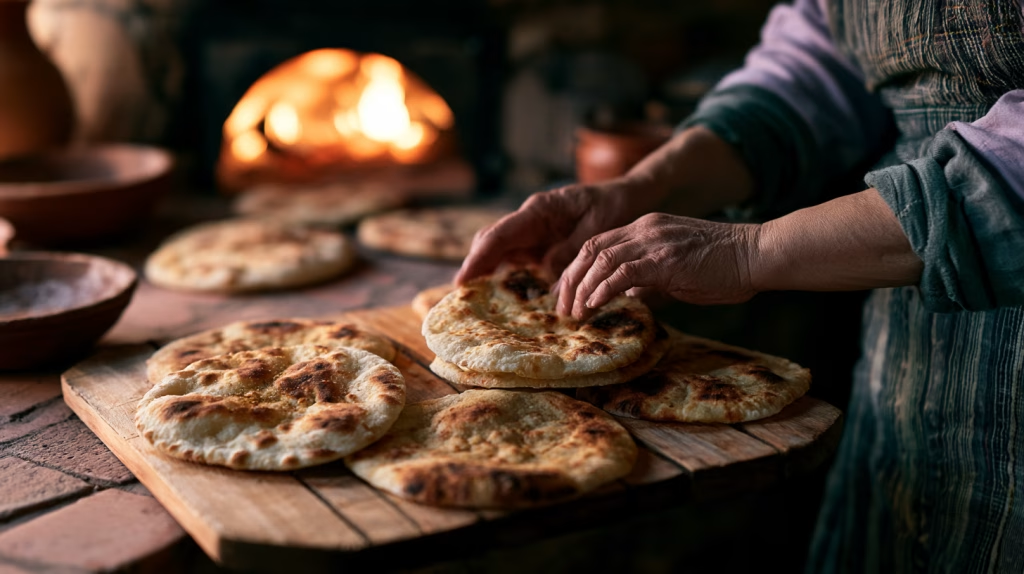
Flatbreads — khobz — accompany every meal, used as utensil as much as food. Bread is treated with reverence: to waste it is taboo. Myworldofinteriors
In practice, this means day-old bread never goes in the bin. It becomes harira — the thick, warming soup of tomatoes, lentils and chickpeas that is eaten to break the Ramadan fast. It becomes rfissa, torn into strips and layered under a chicken tagine with lentils and fenugreek. Traditionally, people eat from the same tagine, using pieces of bread to scoop out the chunks — no cutlery needed, no individual plates, no washing up beyond the pot itself. Yumsome
One vessel. One meal. Almost nothing wasted.
Nose to tail, root to leaf
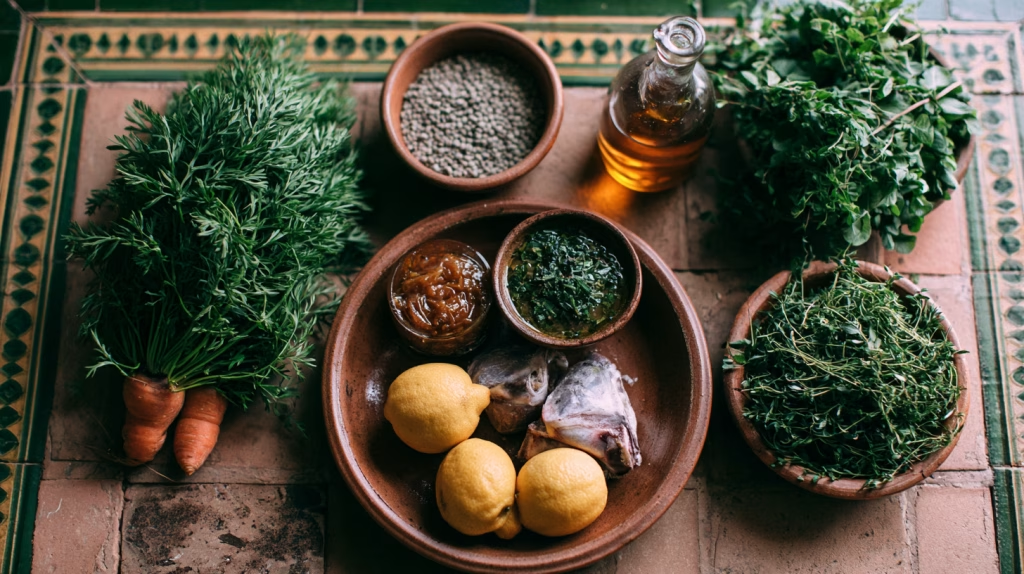
Kefta is one of the best examples of how food is not wasted in Morocco — minced meat, usually left over from other dishes, mixed with paprika, ginger, garlic, parsley, coriander and onion. What the West calls “leftovers,” Morocco calls the next meal. Barcelo
The same logic runs through the whole cuisine. Preserved lemons — made from lemons that would otherwise go soft — become the backbone of countless tagines. Argan oil, extracted from the fruit of the argan tree, leaves behind a paste that gets ground into amlou, a rich almond and honey spread eaten at breakfast. The vegetable water from cooking couscous becomes the base for the next soup.
Nothing leaves the kitchen without contributing something.
What Moroccan Zero Waste Cooking is teaching the world
In April 2025, Morocco launched a national consultation process for a UNESCO project to publish an International Atlas of Food Heritage — aiming to preserve, promote and popularise these heritage foods for future generations. The world is starting to pay attention to what Moroccan kitchens have always known. Africanews
And it arrives at exactly the right moment. As the West scrambles to reduce food waste — responsible for roughly 8% of global greenhouse gas emissions — Morocco offers not a trend, but a tradition. A cuisine that was circular before “circular” was a concept. That was plant-forward before anyone used that word. That slow-cooked before slow food had a movement.
You can read more about that movement — and why Terra believes every bite is a vote — in her piece on the spice markets of Marrakech.
What I brought home
Not just spices. Not just recipes. A different relationship with what’s in the fridge.
The question I now ask before I cook isn’t “what do I want to make?” It’s “what do I have, and what can I make from all of it?” That shift — small as it sounds — changes everything about how you shop, how you cook, and how much ends up in the bin.
Moroccan grandmothers figured this out centuries ago. The rest of us are just catching up.
The most sustainable kitchen isn’t the one with the best gadgets. It’s the one that wastes nothing.