Before you throw it away —
your kitchen has more to give
A zero waste kitchen is not a trend. It is a practice. And it starts with what you almost threw away.
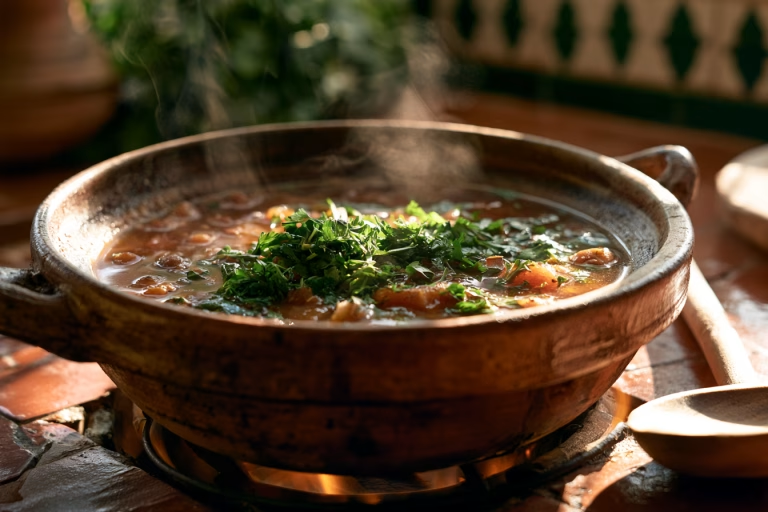
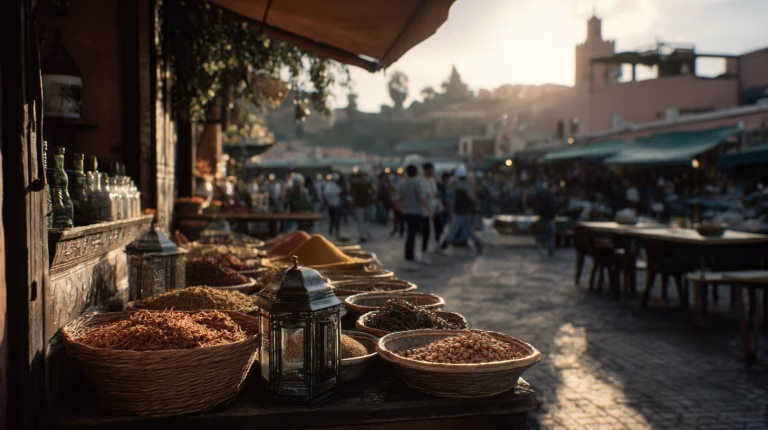
In the souks of Marrakech, nothing is wasted. The vendor who sells you a bunch of coriander will tell you to keep the roots — they are the most flavourful part. The woman who makes harira will use yesterday’s bread to thicken today’s soup. The spice merchant will grind what others leave behind.
Waste, in a traditional Moroccan kitchen, is not a concept. It simply doesn’t exist.
We have forgotten this. Somewhere between the convenience of plastic wrap and the comfort of abundance, we stopped seeing the potential in what remains. We throw away carrot tops and onion skins and stale bread without thinking twice. And in doing so, we throw away both flavour and intention.
This is not about perfection. It is not about an Instagram-worthy zero waste pantry with seventeen glass jars. It is about a shift in how you see your kitchen — and what you decide to pay attention to.
The philosophy
What Morocco quietly teaches you
Traditional Moroccan cooking is built on the principle that every ingredient carries its full worth. A tagine is not just a recipe — it is a way of using everything: the tough cut of meat that needs hours to become tender, the preserved lemon that would otherwise spoil, the olives that nobody else wanted.
Terra noticed this first-hand walking through the spice markets of Marrakech. The merchants there don’t just sell spices — they use every part of the plant. Stems. Seeds. Husks. The blend that becomes Ras el Hanout was historically made from what was left over — the best of what remained, pressed together into something greater than its parts.
Zero waste cooking is not a modern invention. It is an ancient one. We are simply remembering it.
“The most sustainable ingredient is the one you already have. The one you almost threw away.”
In practice
Where to begin
Make a scrap stock — and make it a habit
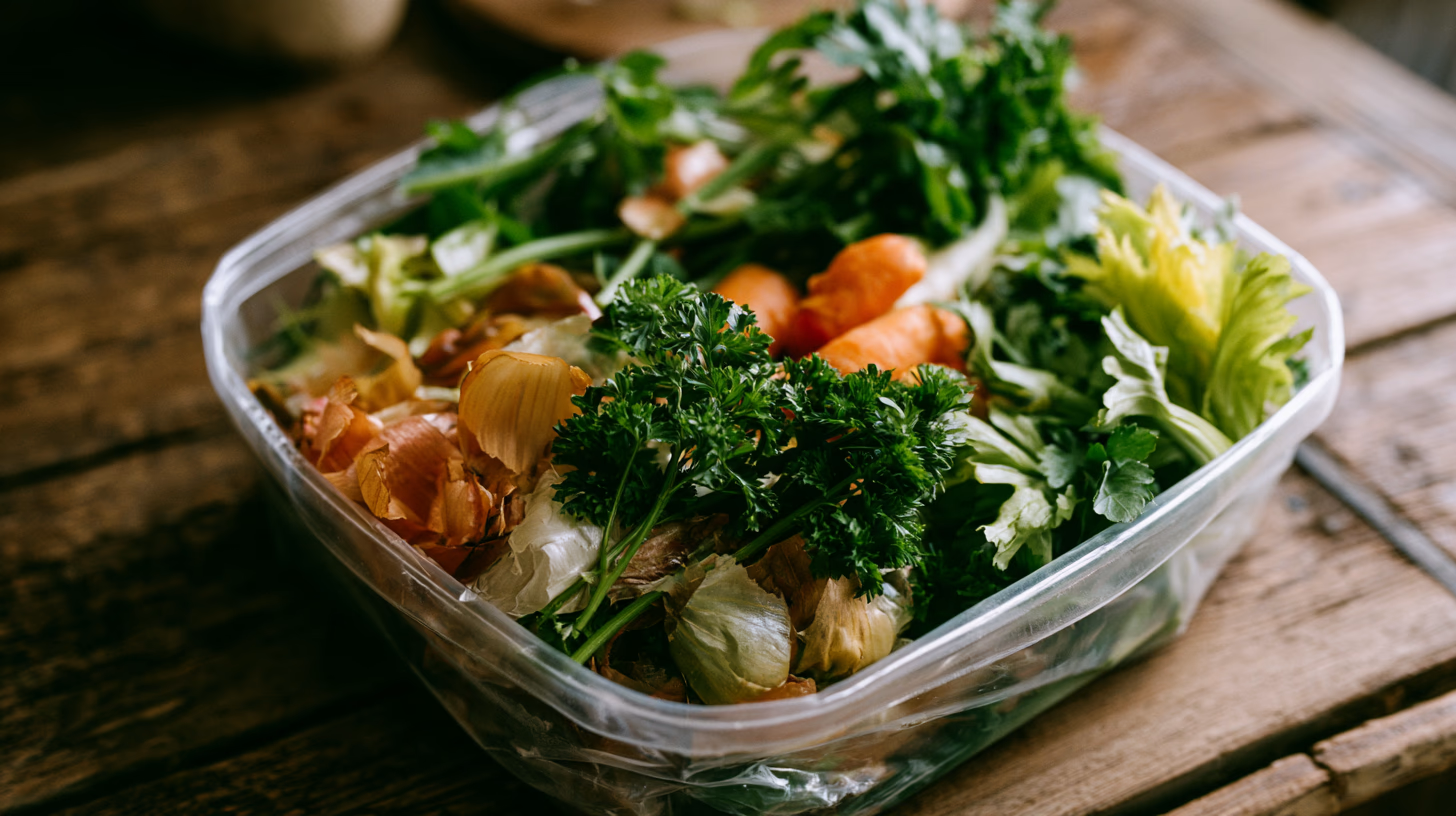
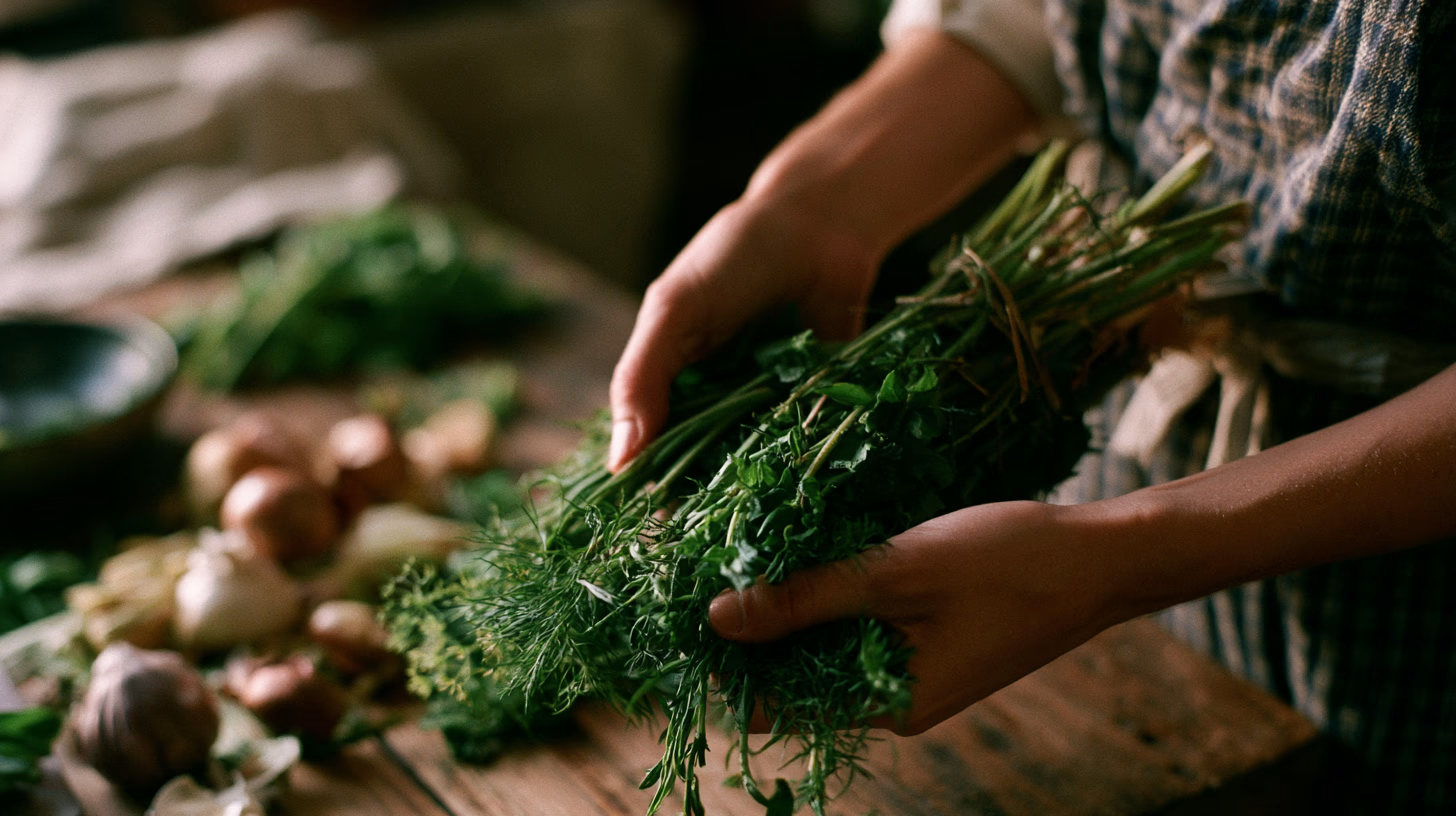
Vegetable scraps are not waste. They are stock waiting to happen. Onion skins, carrot tops, celery leaves, leek greens, parsley stems, fennel fronds — all of it carries flavour. Keep a container in your freezer and add to it throughout the week. When it’s full, simmer everything in water for an hour. Strain. You have stock.
It costs nothing. It adds depth to soups, sauces, rice, and tagines that a stock cube will never replicate.
What to save- Onion and garlic skins (colour and depth)
- Carrot tops and peelings
- Celery leaves and the base
- Parsley and coriander stems
- Leek greens and fennel fronds
- Corn cobs, mushroom stems, tomato cores
Revive stale bread — don’t replace it
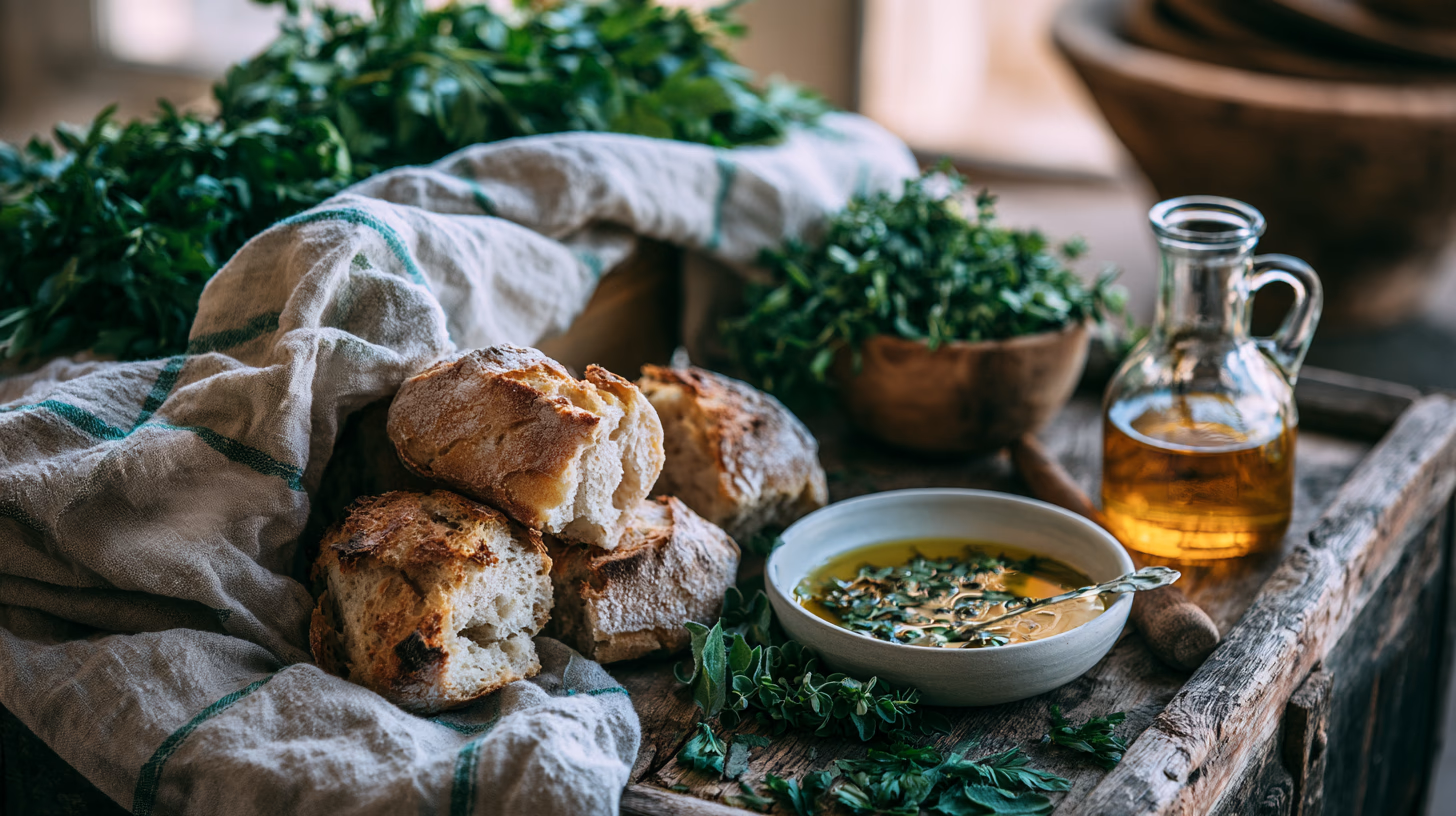
Bread that has gone hard is not dead bread. It is an ingredient. In Morocco, day-old bread is crumbled into harira to thicken it. In southern France, it becomes the base of a ribollita. In Spain, it is revived with olive oil and garlic into migas.
Stale bread can become breadcrumbs, croutons, panzanella, or a crispy topping for gratins. It can be blended into a thickener for soups. It can be soaked in milk and egg and fried into something remarkable for breakfast.
Before you throw it away, ask what it could become with ten minutes and a little olive oil.
 Ideas for stale bread
- Blend into fine breadcrumbs — freeze in a jar
- Cube and toast with olive oil for croutons
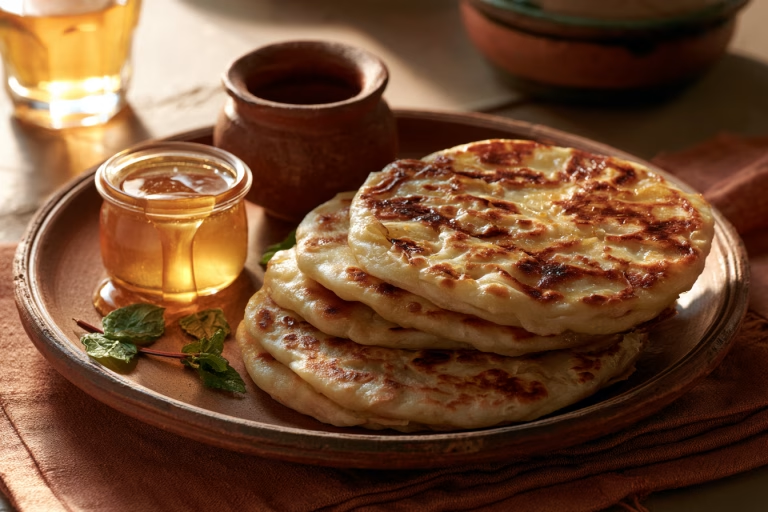
- Soak and fry for a North African-style breakfast
- Crumble into soups to thicken naturally
Preserve what is almost past its best
Most food waste happens in that window between “still good” and “gone”. The tomatoes that are a little too soft. The herbs that are starting to wilt. The citrus that won’t last another day.
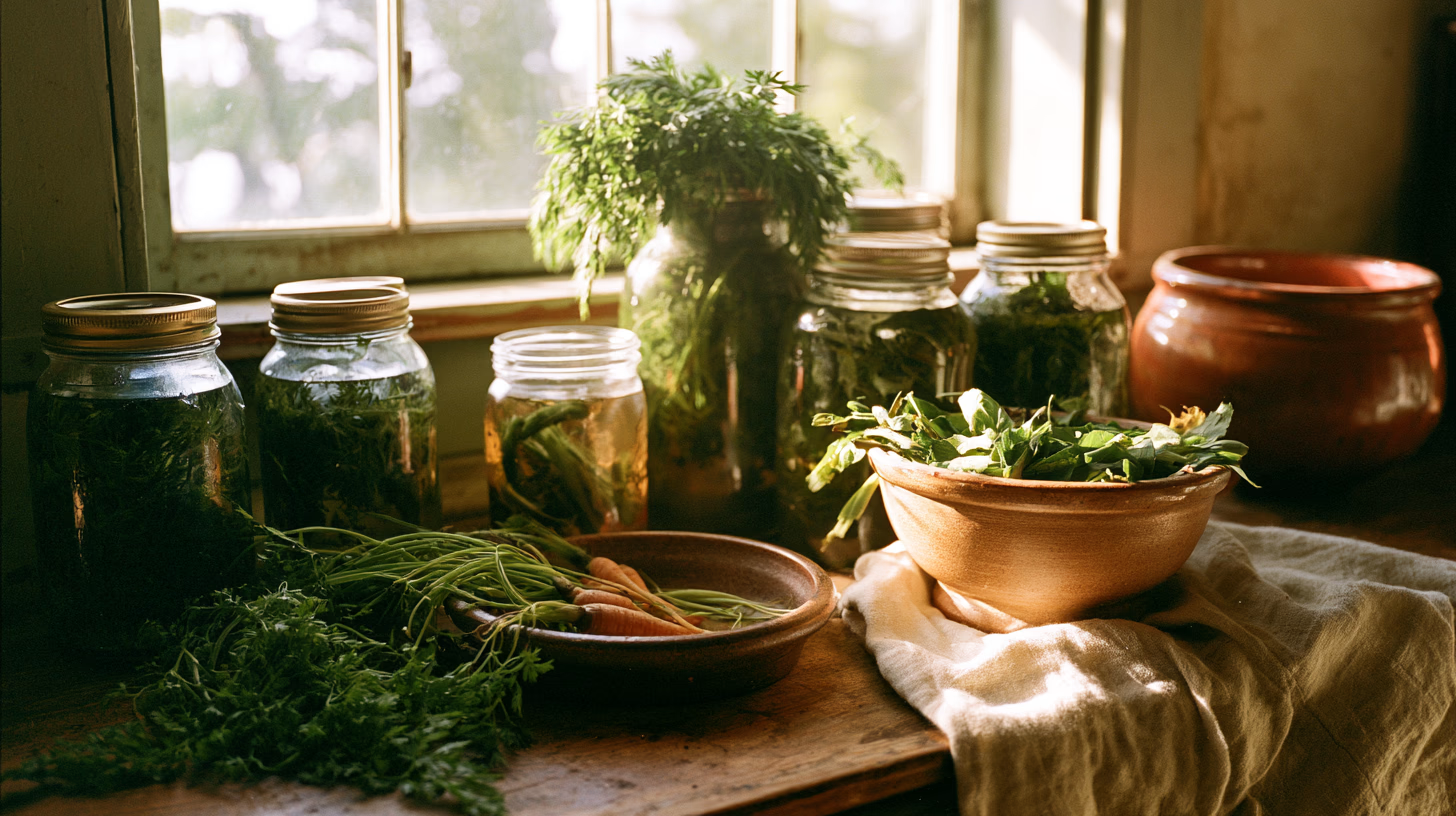
This is exactly the moment to act. Soft tomatoes become a sauce in twenty minutes. Wilting herbs become a herb oil, a green sauce, or a paste to freeze in ice cube trays. Citrus nearing the end of its life gets zested and juiced — the zest frozen, the juice reduced into a dressing.
Preservation is not complicated. It just requires the habit of looking at what you have before you go to the shop.
 Quick preservation ideas
- Wilting herbs → blend with olive oil, freeze in cubes
- Soft tomatoes → cook down into a simple sauce
- Overripe fruit → roast with honey, or freeze for smoothies
- Citrus ends → zest and freeze, juice for dressings
- Leftover spiced oil → marinade for meat or vegetables
Cook once, eat intentionally across days
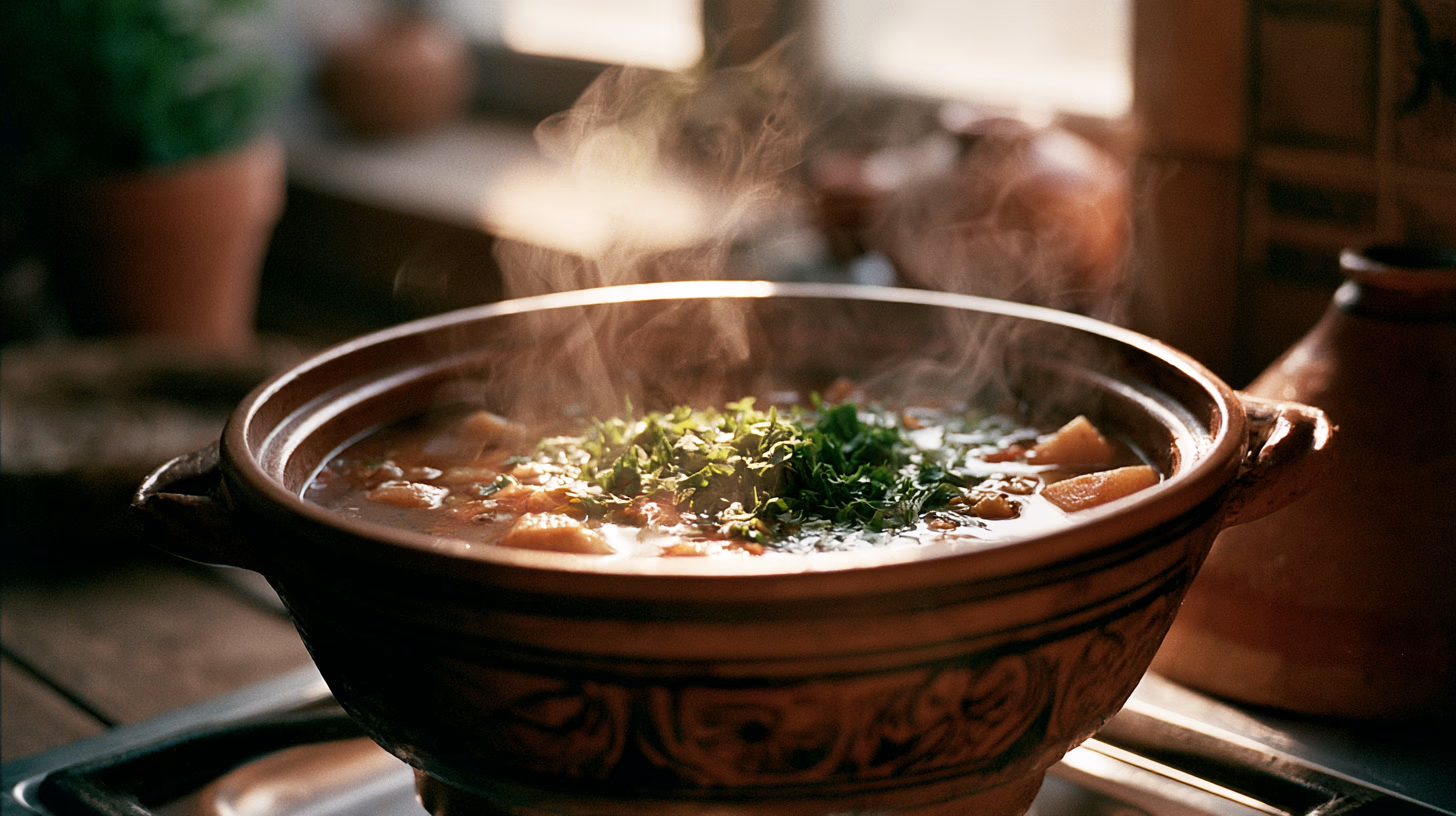
The most sustainable meal is the one that is already made. A pot of harira feeds six, and tastes better on day two. A roasted vegetable tray becomes tomorrow’s grain bowl, and the day after’s omelette filling. A tagine deepens overnight.
Cooking with intention means thinking one meal ahead — not in a rigid meal-plan way, but in the fluid, intuitive way of someone who knows what’s in their kitchen and trusts themselves to work with it.
The Moroccan kitchen does not separate cooking days from eating days. They are the same practice, continuous and alive.
The bigger picture
Every choice in your kitchen is a vote
Food waste is one of the largest contributors to global greenhouse gas emissions. If it were a country, it would be the third largest emitter in the world. But statistics rarely change behaviour. What changes behaviour is meaning.
When you make stock from scraps, you are not just reducing waste. You are practising a different relationship with food — one of attention, of gratitude, of full use. You are cooking the way your grandmother cooked, the way the Marrakech vendor cooks, the way anyone cooks when they understand that ingredients carry value beyond the obvious.
You don’t have to be perfect. A zero waste kitchen is not an absence of waste — it is a direction. A practice. A question you ask yourself more often: what else could this become?
What we throw away says something about how we see the world. Every ingredient that becomes something is a small act of resistance against a system that profits from disposal.
Start with a freezer bag for scraps. Make one pot of stock. See how it tastes. That’s it. That’s where it begins.
Every choice is a vote for the world you want to live in. Make yours in the kitchen.