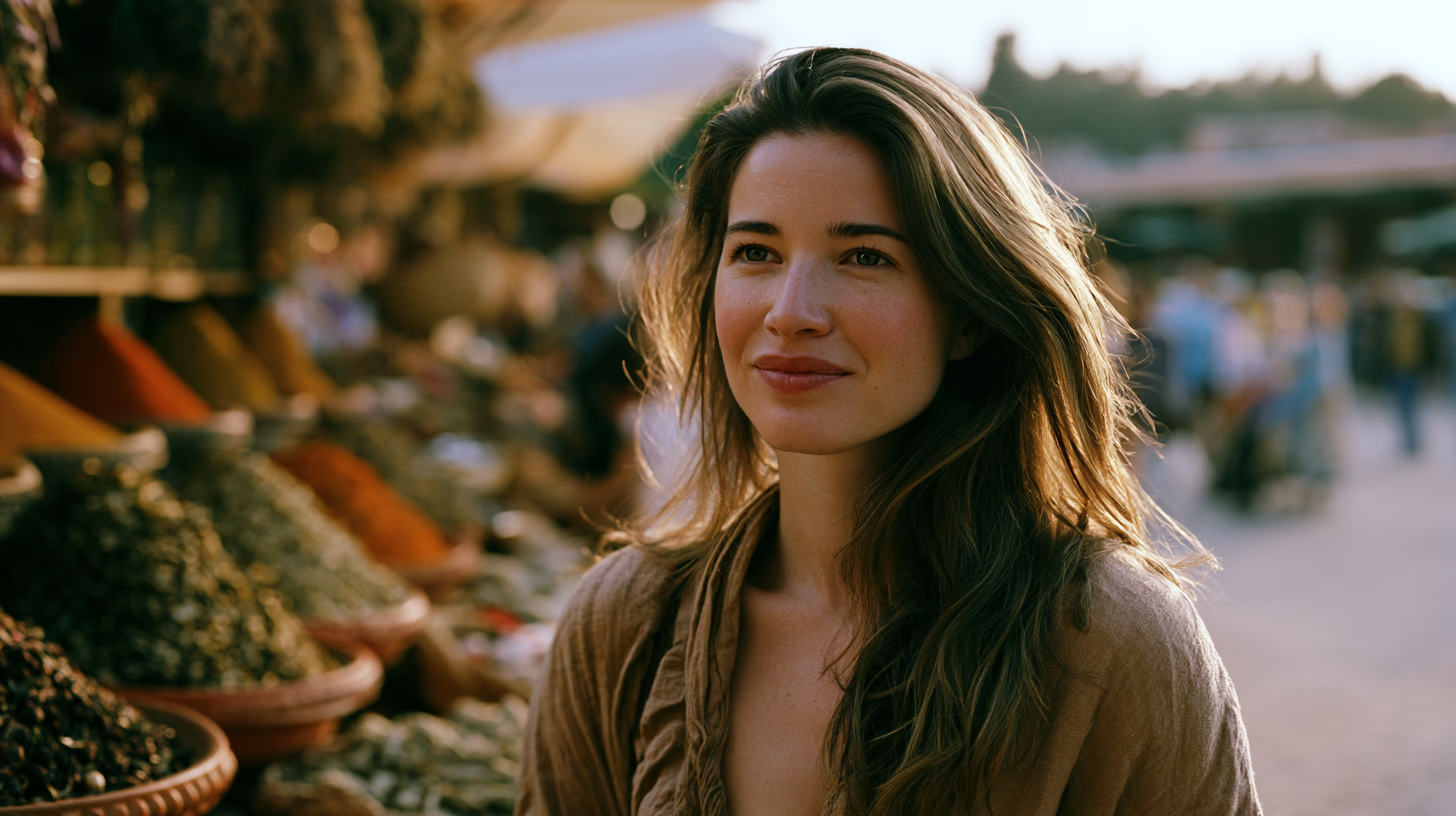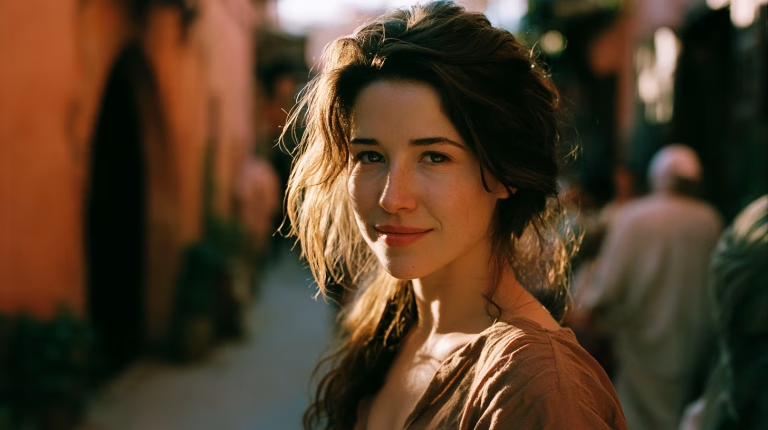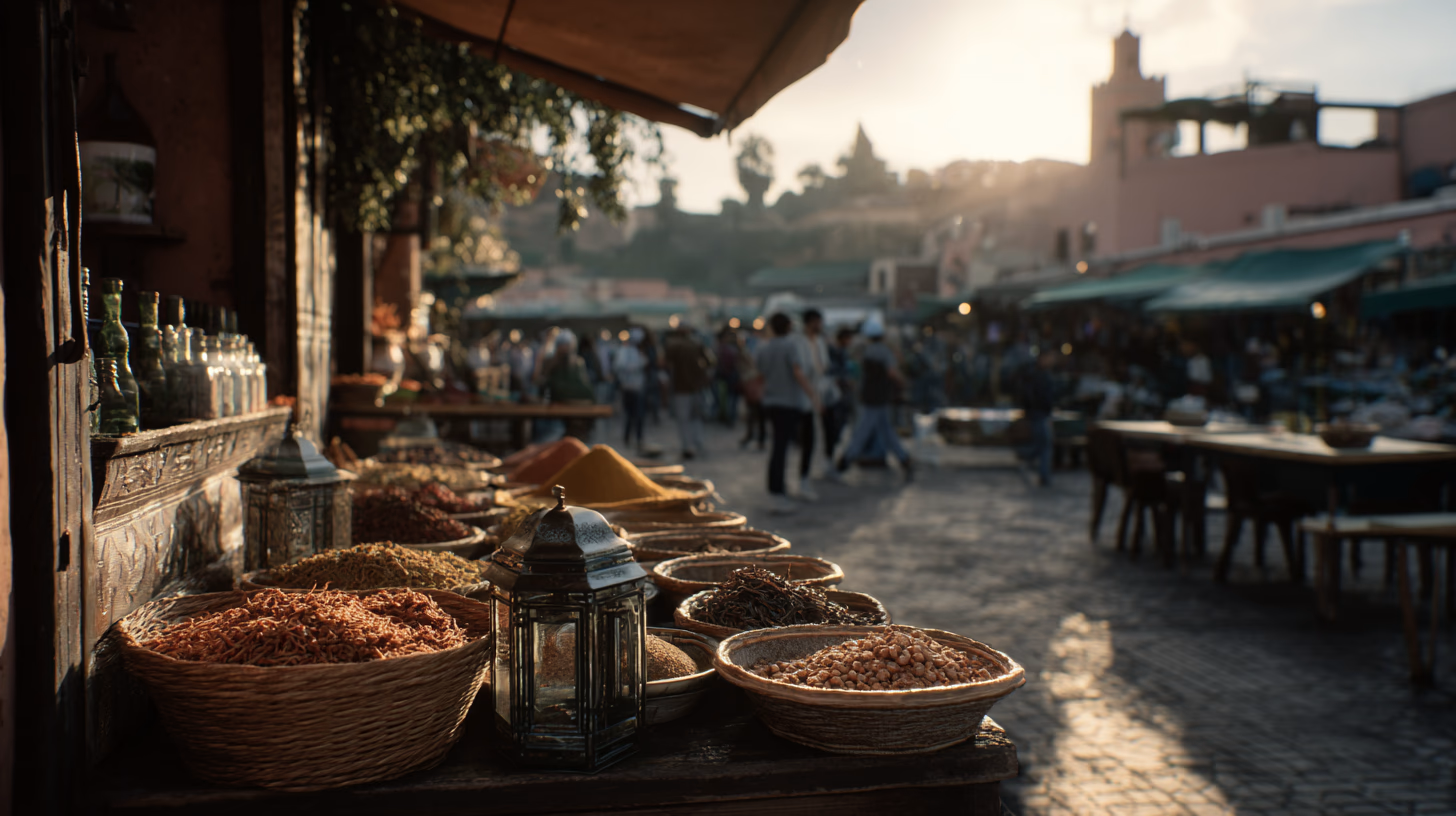
Walking through the spice markets of Marrakech, the souks, at golden hour, I understood why food and travel are inseparable. Every vendor, every scent, every handful of saffron told a story older than any guidebook.
The first thing that hits you is the smell.
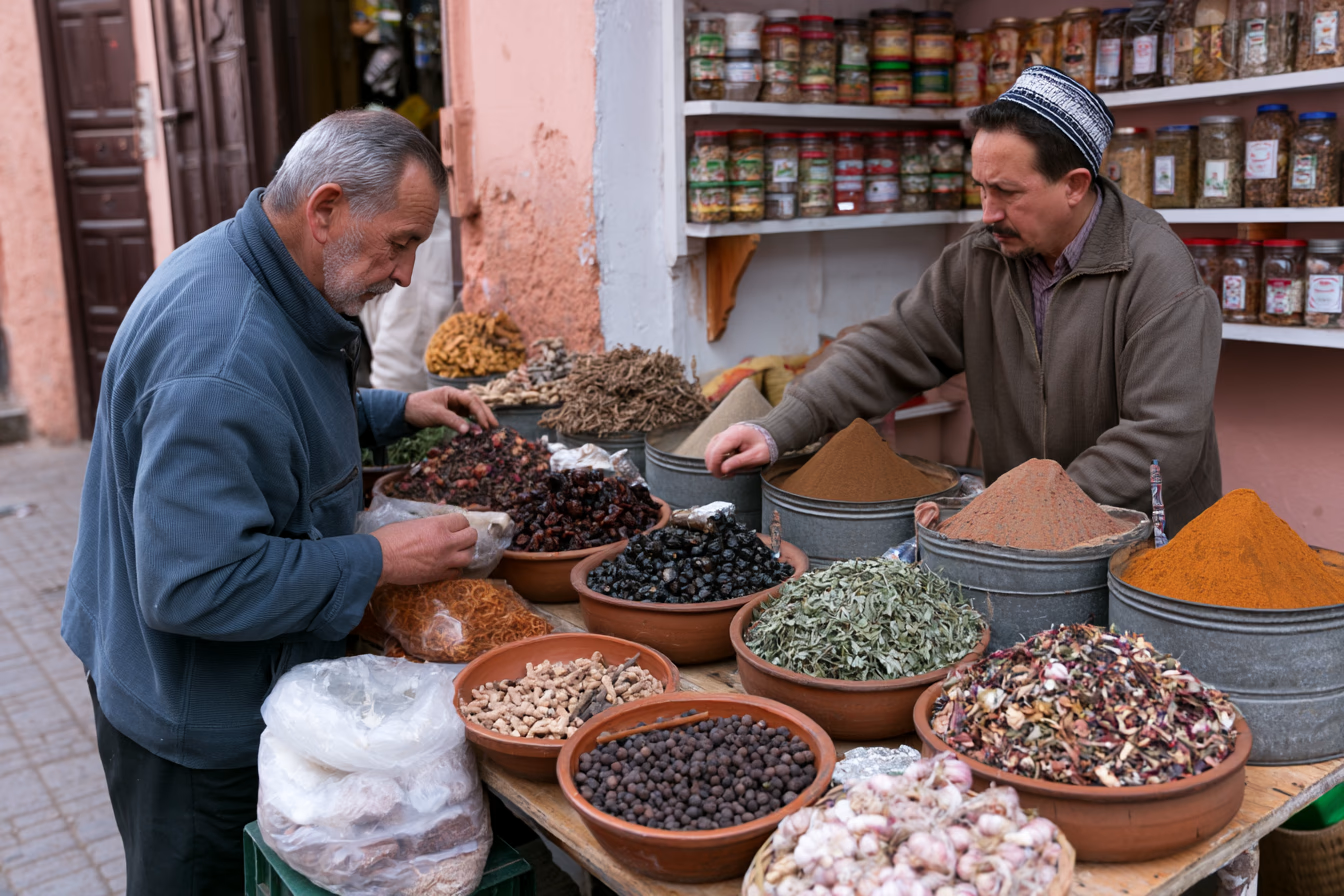
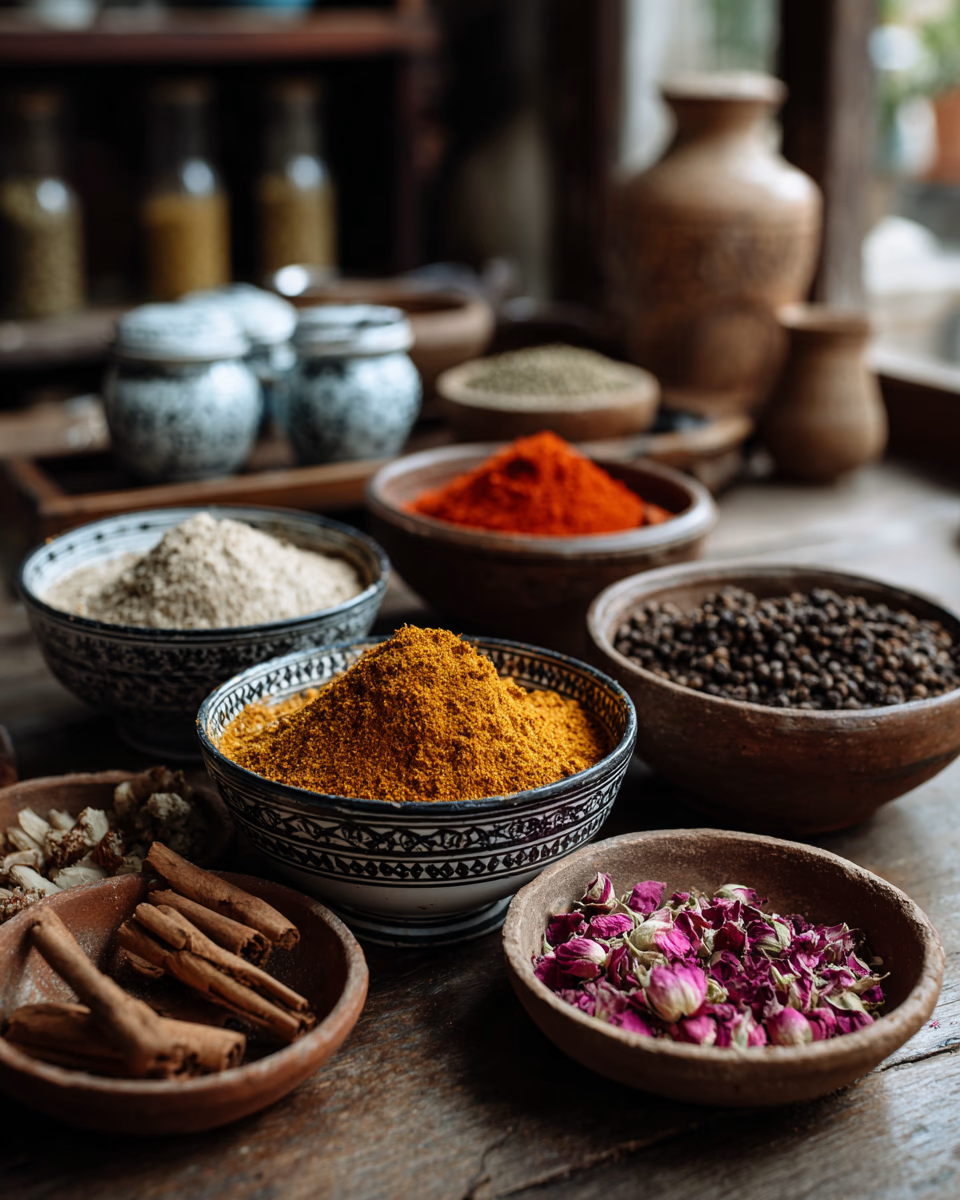
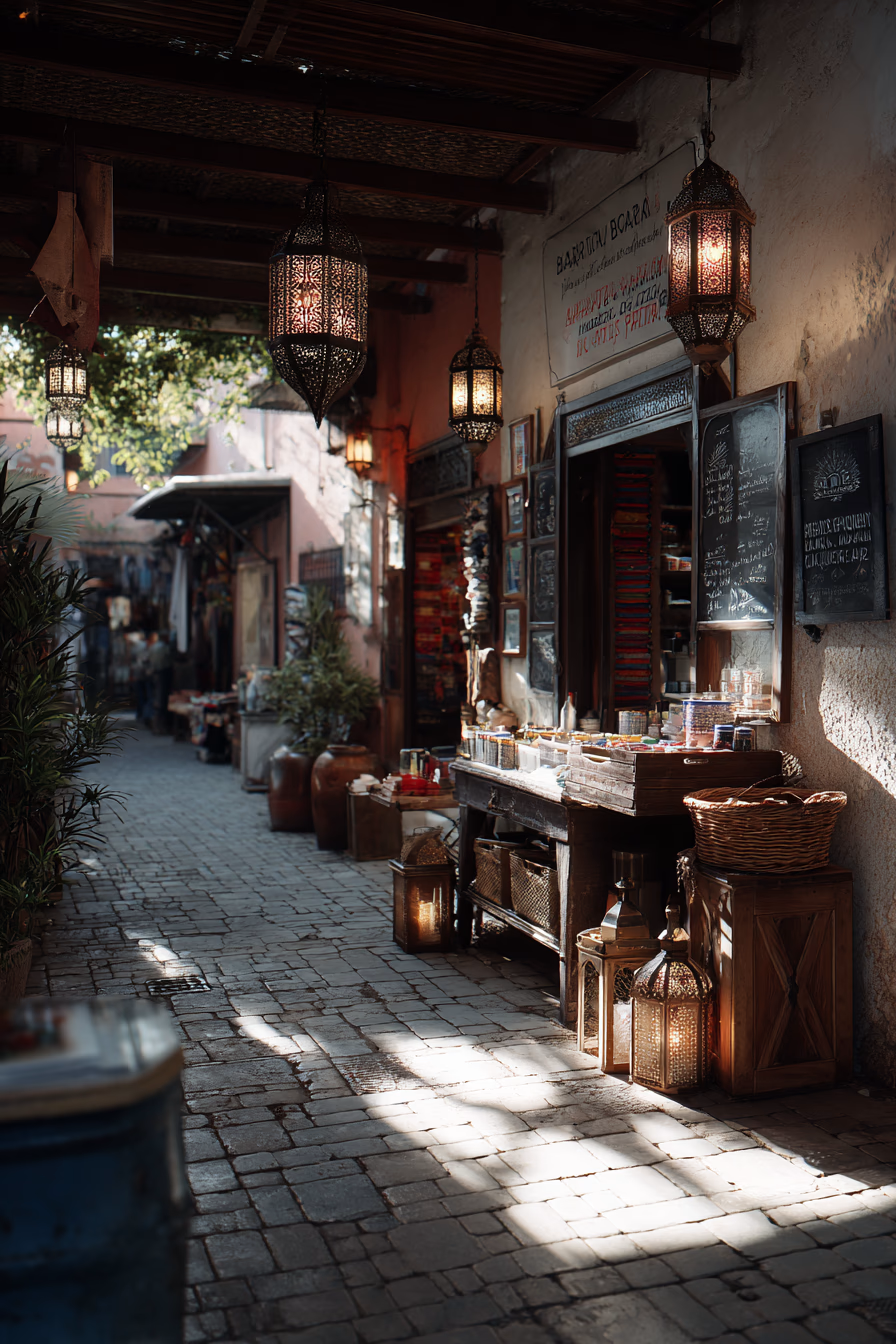
Not an unpleasant one — quite the opposite. It’s a warm, complex cloud of cumin, dried rose petals, preserved lemons and something sweet I still can’t name. In Marrakech’s Rahba Kedima — the spice square — every sense is immediately engaged. You haven’t even seen anything yet, and already you understand: this place is alive.
From the heart of Marrakech’s spice markets…
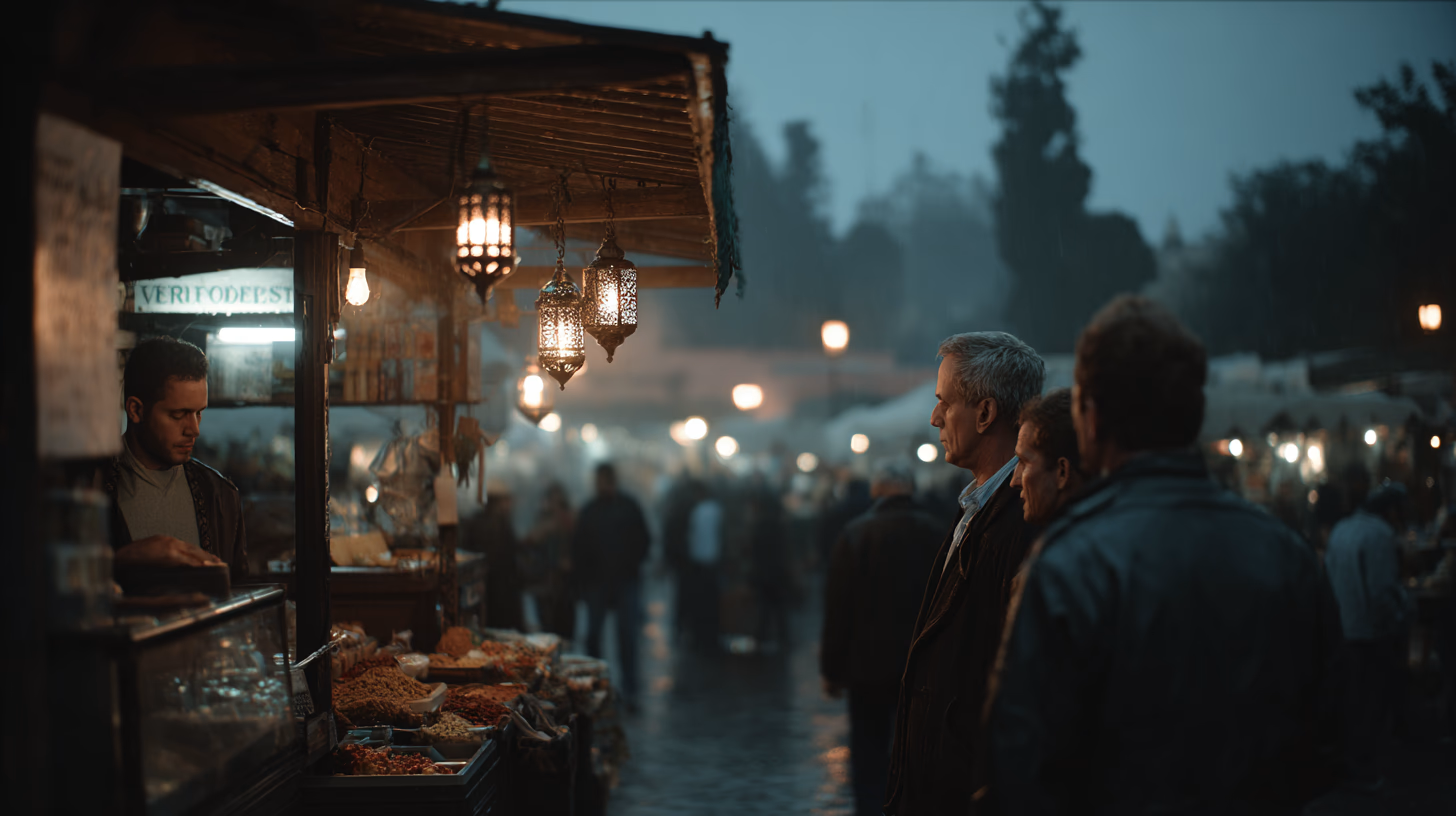
Rahba Kedima is one of Marrakech’s most atmospheric market squares — filled with spices, herbs, baskets, lanterns and centuries of trading culture.
A market older than any guidebook
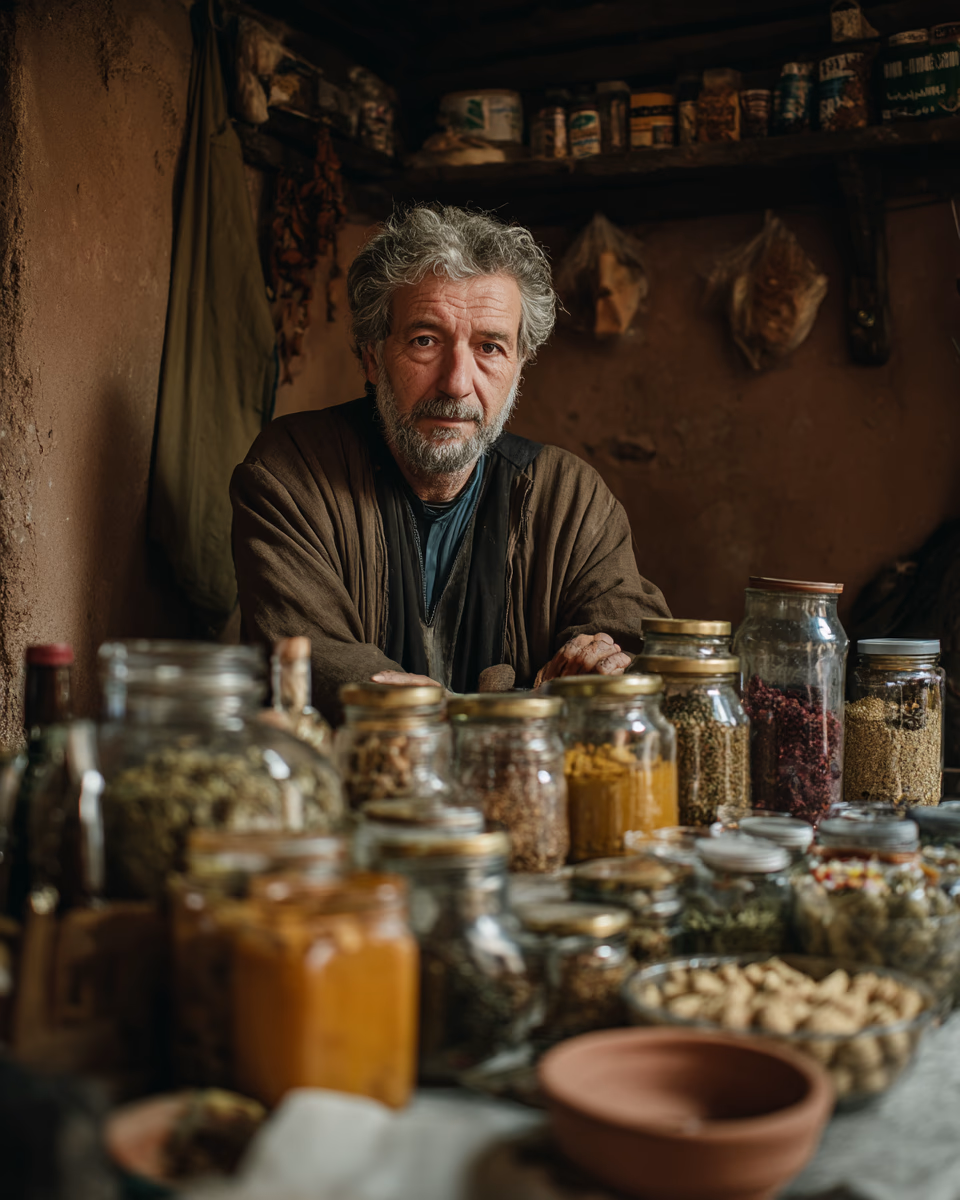
These markets have been trading since the 11th century. The vendors know this. They move slowly, deliberately, with the confidence of people who understand that what they sell is irreplaceable. You won’t find this saffron in a supermarket. You won’t find this depth of flavor in a jar on a shelf somewhere in a fluorescent-lit aisle.
Here, every spice has a story. Ask where the saffron comes from and the vendor will tell you — which region, which family, how many hours of work went into those tiny threads. That conversation alone is worth the trip.
“The best spice is the one that has a story. Ask where it comes from. Always ask.”
These markets have been trading since the 11th century. The vendors know this. They move slowly, deliberately, with the confidence of people who understand that what they sell is irreplaceable — a living example of what the Slow Food movement has been protecting for decades.
What I bought — and what the Spice Markets of Marrakech taught me
I spent three hours in that square. I bought more than I needed: a small bag of ras el hanout blended with 27 spices, dried rosebuds, a handful of black sesame, and two precious grams of saffron wrapped in paper like a gift.
But more than ingredients, I brought home a philosophy.
Local markets like Rahba Kedima aren’t just places to buy food. They’re places where food still has meaning. Where the connection between land, labor and plate is visible, tangible, real. Nobody here is pretending that food just appears on shelves. Everyone knows where it comes from.
In Marrakech’s Rahba Kedima — the spice square — every sense is immediately engaged. You haven’t even seen anything yet, and already you understand: this place is alive. If you want to feel Marrakech before you find the markets, start with getting lost in the medina — it’s the best preparation for everything that follows.
The moment it clicked
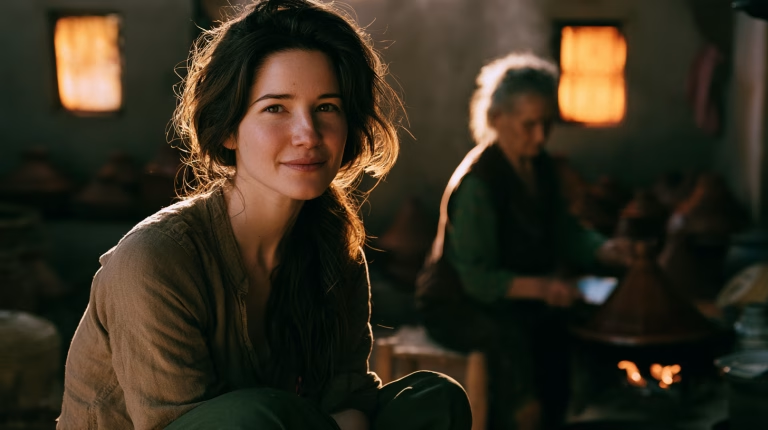
It happened near the end of my third hour, when I almost walked past a small wooden stall tucked behind a tower of dried hibiscus flowers. An older woman — she couldn’t have been less than seventy — was grinding something by hand. Slowly. No rush. I stopped and watched. She looked up, said nothing, and offered me a pinch of the powder on her palm.
It was a spice blend I didn’t recognise. Warm, slightly smoky, with something almost floral underneath. I bought a small bag. I still don’t know exactly what’s in it.
But I understood, standing there, that this is what markets like Rahba Kedima actually sell: not spices, but the knowledge behind them. Knowledge that doesn’t exist in any recipe book. Knowledge that only lives in hands like hers.
Slow food isn’t a diet — it’s a relationship
That’s what Marrakech reminded me. Slow food isn’t about eating slowly. It’s about paying attention. To the person who grew it. To the soil it came from. To the hands that harvested, dried, blended and wrapped it.
When I cook with that saffron now, I think about Rahba Kedima. The smell, the colors, the vendor who showed me how to tell real saffron from fake by rubbing it between my fingers. That memory is part of the meal.
And that, I think, is exactly the point. Every market teaches you something different. Every spice holds a different story. I don’t know yet which square, which smell, which pinch of something unnamed will stop me next — but I know I’ll be paying attention when it does.