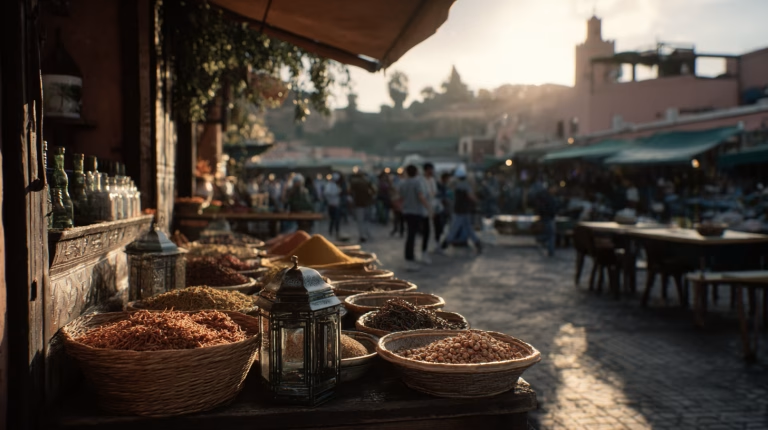
Terra reflects on what it means to travel to one of the world’s most overcrowded destinations — and why the answer isn’t staying home.
I need to start with an uncomfortable truth.
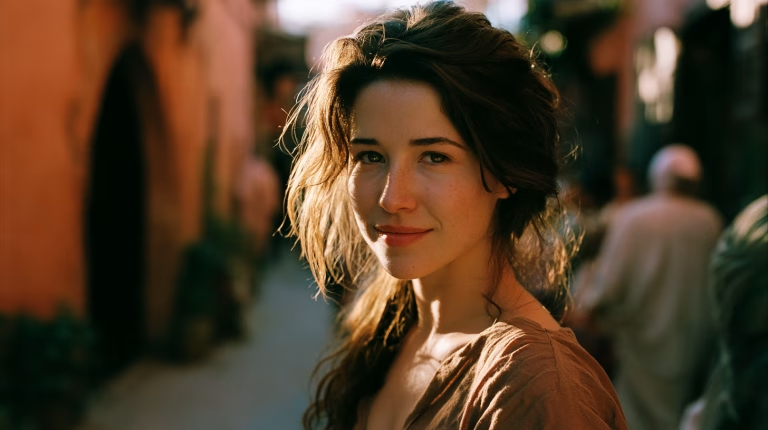
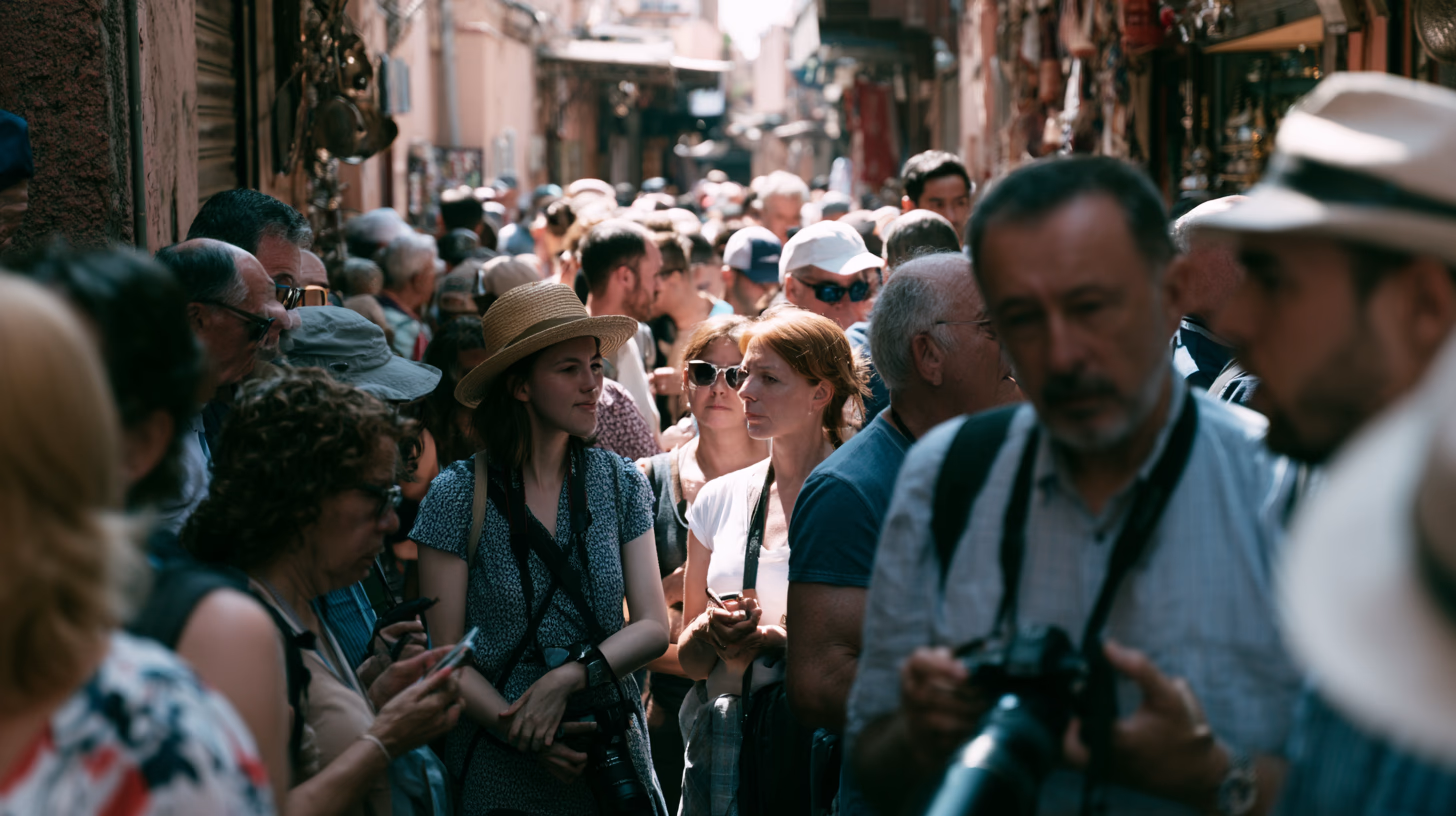
When I walked through the medina of Marrakech, I was part of the problem. Not in a dramatic, catastrophic way — but in the quiet, cumulative way that millions of individual choices become a collective force. I was a tourist in a city that has become a case study in overtourism. Search for “overtourism Marrakech” and you’ll find no shortage of warnings, statistics and debates about a destination struggling to balance its global popularity with the realities of daily life.
And I went anyway. So let’s talk about that.
The numbers don’t lie
A McKinsey & Company report ranks Marrakech among the world’s most overcrowded tourist destinations — exceeding Rome and Paris in visitor density per square kilometre. That’s not a footnote. That’s a crisis hiding behind a beautiful facade. CNN
Marrakech is predicted to see an 86% increase in tourism by 2030. New flight routes, new luxury hotels, a growing bucket list culture — all of it funnelling more and more people into the same narrow alleys, the same squares, the same souks. The medina wasn’t built for this. It was built for the people who live there. CNN
And those people are still there — trying to live, work, raise children — while the world walks through their neighbourhood with a camera.
What overtourism actually looks like
It’s not always dramatic. It’s the riad that used to house a family, now converted into an Airbnb. It’s the spice vendor who has learned twelve languages worth of sales pitches because that’s what survival requires. It’s the narrow street where three tour groups, two mopeds and a delivery cart meet and nobody can move.
It’s the slow, steady transformation of a living neighbourhood into a stage set — where everything authentic is preserved just long enough to be photographed, then replaced by something more photogenic.
Tourism contributes roughly 7% to Morocco’s national GDP. That dependency is both the problem and the reason the problem is so hard to solve. You can’t simply tell a country to stop welcoming visitors when those visitors are feeding families. Travel And Tour World
But here’s what I also saw
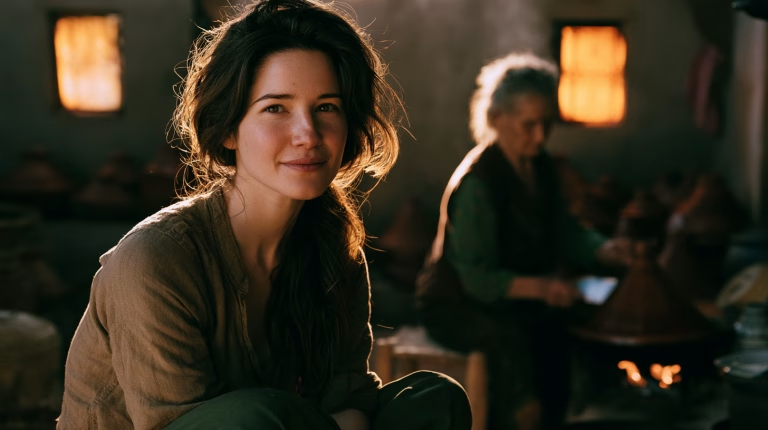
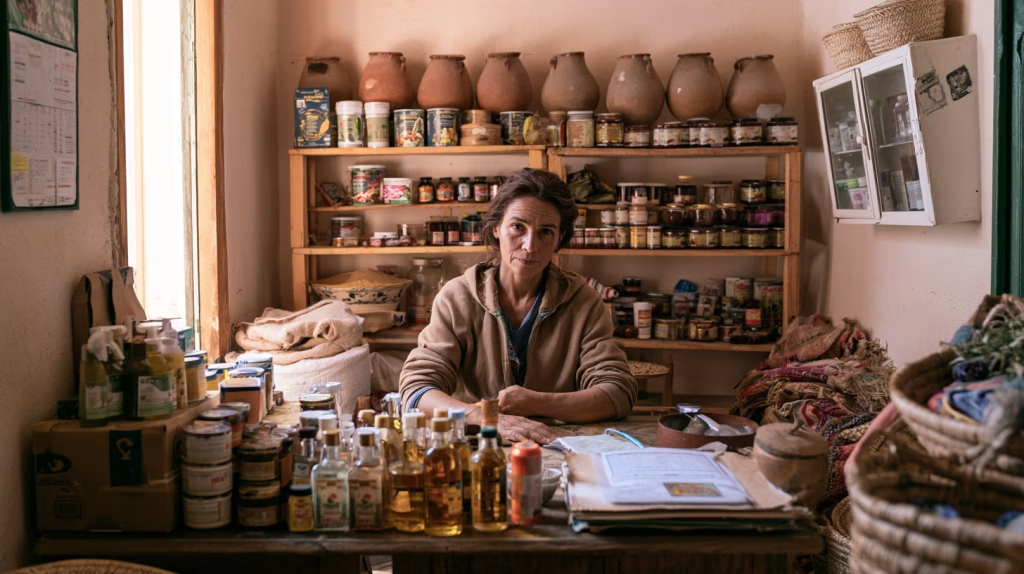
In the medina, tucked behind the main souk routes, I found a small cooperative run by local women — selling argan oil, handwoven textiles, preserved lemons. No commission touts outside. No pressure. Just women who had built something that kept the money in their hands, in their neighbourhood.
I found a guesthouse owner — third generation, same family, same riad — who charges fair prices, pays his staff properly, sources his breakfast from the market around the corner. He told me he turns away tour operators who want to bring forty people at a time. “I’m not a museum,” he said. “I’m a home.”
That philosophy — staying present, supporting locals, moving slowly — is exactly what I wrote about in the art of getting lost in the medina. It starts with putting the map away.
There is a new kind of traveller emerging — someone who knows Morocco is special and wants to support it precisely because the world feels chaotic. Someone choosing the family guesthouse over the international chain. The cooperative over the tourist shop. The slow meal over the fast photo. Travel And Tour World
That traveller exists. I want to be that traveller.
So why go at all?
Because the alternative — staying home, leaving Marrakech only to the visitors who don’t think about any of this — helps no one.
The question was never whether to travel. It’s how.
Every dirham I spent at a local hammam stayed in the neighbourhood. Every breakfast I ate at a family-run café was a vote for the kind of Marrakech worth preserving. Every time I stopped, asked permission before photographing someone, bought directly from the maker — that was a choice about the kind of tourist I wanted to be.
Morocco is positioning itself as both a growth leader and a resilience-focused tourism hub — investing in sustainability, diversifying beyond Marrakech, building infrastructure that can absorb growth without destroying what makes the place worth visiting in the first place. Travel And Tour World
That effort deserves tourists who meet it halfway.
What you can do
How to travel Marrakech with intention
- ✦ Stay in family-run riads, not international chains
- ✦ Eat where there’s no English menu outside
- ✦ Buy directly from makers, not from middlemen
- ✦ Walk slowly. Ask questions. Tip generously.
- ✦ Go somewhere other than Jemaa el-Fna at peak hour
- ✦ Consider Fes, Essaouira or Chefchaouen — Morocco is vast and beautiful far beyond its most photographed square
The medina doesn’t need saving from tourists. It needs tourists who behave like guests.